In our Configuring OpenTelemetry in Ruby blog post, we showed how to configure OpenTelemetry in a Ruby on Rails backend. In this post, we’ll cover how to configure OpenTelemetry in the front-end JavaScript in order to measure performance of browser and mobile devices and how to configure distributed tracing to work across the frontend and back end telemetry collection. Let’s dive in!
Talk to anyone in the tech space and you’ll likely hear horror stories of how home lab setups can grow out of control or about long lists of VMs used to test various software systems. As a Criblanian, I’m no exception – I have at least a half dozen instances of Cribl LogStream deployed everywhere from my local machine, on docker containers, or on a few EC2 instances in AWS.
Today it is even easier to capture logs in your Java applications. Developers can get more data with their application logs using a new version of the Cloud Logging client library for Java. The library populates the current executing context implicitly with every ingested log entry. Read this if you want to learn how to get HTTP requests and tracing information and additional metadata in your logs without writing a single line of code.
In late 2021, Microsoft published an article regarding the connectivity principles for securely managing Microsoft 365 traffic in order to get the best possible performance. Take me to the Article: Microsoft 365 Network Connectivity Principles >> In the section focused on avoiding network hairpins, Microsoft states that as a general rule, the shortest and most direct route/call flow between the user and their closest Microsoft 365 endpoint will offer the best performance.
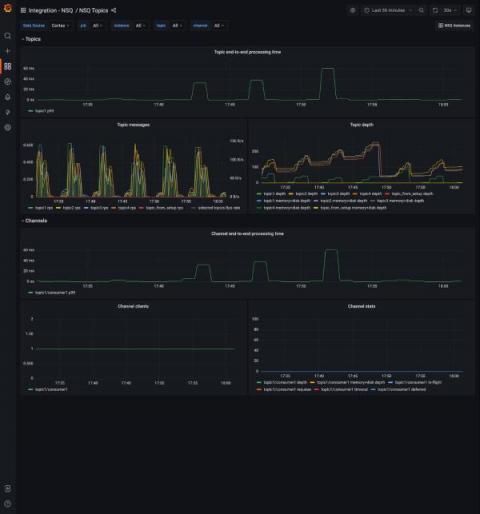
Today, I am excited to introduce the NSQ integration available for Grafana Cloud, our platform that brings together all your metrics, logs, and traces with Grafana for full-stack observability. NSQ is a real-time distributed messaging platform designed to operate at scale, handling billions of messages per day. It’s a simple and lightweight alternative to other message queues such as Kafka, RabbitMQ, or ActiveMQ. This will walk you through how to get the most out of the integration.
Log messages - also known as event logs, audit records, and audit trails – document computing events occurring in IT environments. Generated or triggered by the software or the user, log messages provide visibility into and documentation of almost every action on a system. So, with all that in mind, let’s explore all the biggest log management challenges of modern IT and the solutions for these problems.
HAProxy and HAProxy Enterprise collect a vast amount of information about the health of your applications being load balanced. That data, which uses the Prometheus text-based format for metrics, is published to a web page hosted by the load balancer, and since many application performance monitoring (APM) tools can integrate with Prometheus, it’s likely that you can visualize the data using the APM software you already have.
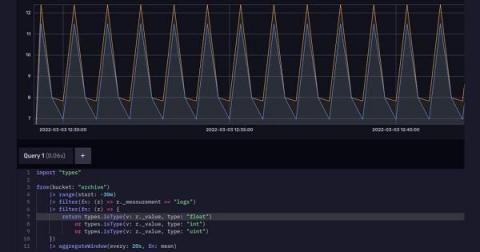
As a strictly typed language, Flux protects you from a lot of potential runtime failures. However, if you don’t know the column types on the data you’re querying, you might encounter some annoying errors. Suppose you have a bucket that receives regular writes from multiple different streams, and you want to write a task to downsample a measurement from that bucket into another bucket.