Ah, I too have wondered about this. TL;DR: The Resource says what program is sending these spans and where it’s running. You can skip it if you define OTEL_SERVICE_NAME in the environment. When I’m setting up tracing (for instance, in a Node.js app), I have to create a Resource object in order to set up the OpenTelemetry SDK: If I don’t define that resource parameter, then tracing will still work. But my spans will show up with aservice.name of unknown_service:node.
If you’re working with microservices in a large distributed environment, you’ve probably got your monitoring and logging on lock, and you may even be lucky enough to have properly instrumented APM (distributed tracing) for consumer calls. But, did you know you’re likely still facing an observability gap? How many incidents have you worked that required hours of sleuthing only to end with a single team needing to roll back a deployment? It’s more common than you may think!
It's hard to imagine a world without APIs. APIs connect our mobile phones or computers to do everything from making purchases and payments to interacting on social media, extracting or sharing data or any other computer to computer interaction in our business or daily life. If you want to open up a heated debate, ask one of your programming partners or developer colleagues what makes up a good API response time?
Jeff Dean at Google Brain once said that the most sophisticated AI algorithms succumb to the quality of the dataset they rely on. That's a fancy way of saying: "Garbage in, garbage out." And if your organization is struggling with the effects of dirty data-inaccurate analytics, sub-optimal automations, and persistent problems with IT operations management-chances are you've got visibility gaps in your infrastructure that have you operating with a CMDB filled with inaccurate, incomplete, or obsolete information.
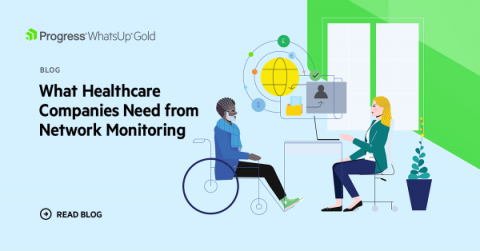
IT pros in the healthcare industry have one of the toughest jobs imaginable. Herculean task number one is protecting patient data, with failure to do so bringing hefty HIPAA fines and more than a little bad press. Gargantuan task number two is stopping breaches (and then doing forensics if one busts through). Failing either of these is not exactly a confidence booster. Don’t forget, almost all hacks and breaches either attack the network itself or go across it to reach their target.
As a typical Internet user, nothing is more frustrating than waiting for a web page to display, only to receive a “Page Not Found” 404 error status code. Sure, we try reloading the page, and sometimes that gets the gremlins to start working, but most times, the issue is out of our hands. For all of us typical users, we either go onto the next thing or find a different site. There’s a lot going on in the background that most of us are completely unaware of.
Before we jump into this, it’s important to note that older names, and still in use in some areas of AWS, are often referred to SSM which stands for Simple Systems Manager. AWS Systems Manager is designed to be a control panel for your AWS resources so you can manage them externally without having to SSH into the resources individually. What is important to remember with AWS Systems Manager is that features contained within the tool may occur additional pricing.
Almost since the moment the world shut down at the start of the pandemic, we’ve heard what a blessing remote and hybrid work is for environmental sustainability. With fewer of us driving and flying for work, it can feel like hybrid work is the sustainable solution we’ve dreamed of for so long. Yet at the same time, attention is also being cast on big tech companies like Facebook and Google for their role in producing (and curbing) e-Waste.
Websites are the economic engine for modern businesses and service providers. A user-friendly, always-on, secure site reassures visitors and shows customers, business partners and others you are serious about your business. As CTO, DevOps manager, or IT lead, you need a digital experience monitoring (DEM) strategy to prevent or minimize website or API downtime.