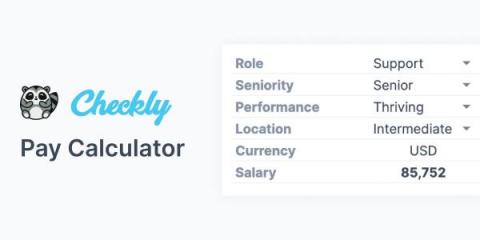
We all know that pay is just as hard as it is important. Having a team distributed over 11+ countries makes pay even harder than in a traditional setup. I joined Checkly in mid-2021 with the promise of a fair and transparent culture in a remote tech startup and my goal was clear: make Checkly one of the best employers in our industry. A topic that I wanted to tackle early on was pay. How can we make pay less nebulous and more transparent, fair, and predictable?
You might think that a customer seeing a maintenance page message when they land on your website is a bad thing but think again. If you’re clever with your branding, you can really show off your personality, and make website visitors feel better about not being able to access your website. Never thought that could happen, right? Well I’ve put together the best maintenance pages across the years to show you exactly how you can make planned website downtime look like a breeze.
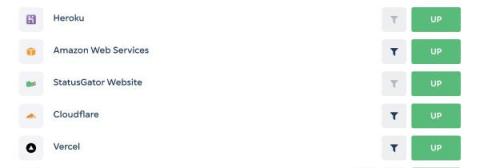
For more than 7 years, StatusGator has monitored the world’s status pages and aggregated the status of more than 1,000 cloud services into custom dashboards. With a quick glance, you can see the status of every service you depend on. But what if a website you depend on does not have a status page? What about internal tools, sites you host yourself, and other services without public status information?
As you’re settling in with your Monday morning coffee, your email pings. The subject line reads, “Documentation Request.” With the internal sigh that only happens on a Monday morning when compliance is about to change your entire to-do list, you remember it’s that time of the year again. You need to pull together the documentation for your external auditor as part of your annual ISO 27000 and ISO 27001 audit.
SREs and Devs are used to solving problems even when an awkward or inefficient way is the only way. In AppScope 1.0, SREs and Devs have a new alternative to standard methods, that the AppScope team thinks will make that problem-solving a lot more fun. We in the AppScope team constantly hear firsthand about life in the SRE trenches. For this blog, we “interview” a fictional SRE/Dev whose thoughts and comments are a mash-up of things we’ve heard from real people we know.
Technologies such as serverless computing frameworks and CI/CD automation tools help accelerate software development lifecycles (SDLC) to give development teams a competitive edge in the marketplace. Armed with these technologies, teams can deploy and innovate faster and more frequently by automating repetitive tasks and eliminating the need to manage or provision servers.
Dashboards are one of the most basic and popular tools software engineers use to operate their systems. In this post, I'll make the argument that their use is unfortunately too widespread, and that the reflex we have to use and rely on them tends to drown out better, more adapted approaches, particularly in the context of incidents.
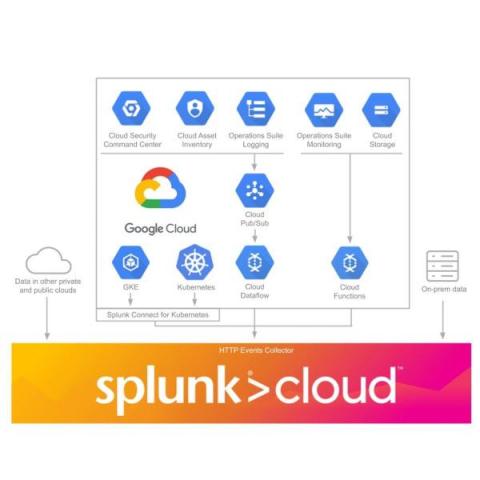
In April 2021, Splunk launched Splunk Cloud on Google Cloud. Since then, a large and growing number of integrations, applications, tools, and solutions have been created to enable or enhance use cases across data protection, productivity, safer remote working and other security visibility needs. We’ve highlighted a few of the more noteworthy additions below for any current or prospective users of Splunk Cloud on Google Cloud.