Operations | Monitoring | ITSM | DevOps | Cloud

3 Metrics to Monitor When Using Elastic Load Balancing

One of the benefits of deploying software on the cloud is allocating a variable amount of resources to your platform as needed. To do this, your platform must be built in a scalable way. The platform must be able to detect when more resources are required and assign them. One method of doing this is the Elastic Load Balancer provided by AWS. Elastic load balancing will distribute traffic in your platform to multiple, healthy targets. It can automatically scale according to changes in your traffic.

Observability for the Software Industry: Top 4 Challenges and How Monitoring Can Help

Software companies face more challenges than ever before to keep pace in an ever-evolving industry that requires innovation and reliability. The pressure to adapt to fast-moving and sophisticated technologies can easily create silos amongst teams and a lack of visibility within organizations. With legacy technology stacks and systems now in the rearview mirror, the focus of large-scale software development has shifted to ensuring standardization and distributed computing in a growingly serverless world.

The Cost of Doing the ELK Stack on Your Own

So, you’ve decided to go with ELK to centralize, manage, and analyze your logs. Wise decision. The ELK Stack is now the world’s most popular log management platform, with millions of downloads per month. The platform’s open source foundation, scalability, speed, and high availability, as well as the huge and ever-growing community of users, are all excellent reasons for this decision.

Proper Python Instrumentation: 5 Things to Keep In Mind

Python’s USP as a programming language is that it’s flexible, easy to use, and quick to get started and iterate with. These virtues have led it to become the most popular programming language in 2022 and be used by millions of developers. As Python applications continue to multiply and scale to cater to millions of users worldwide, instrumentation and monitoring tools play a role more crucial than ever – in building robust, performant software.

What is the Distributed Cloud?: The Hybrid Cloud Solution Driving the Future Workplace

“It’s in the cloud!” Whether you’re talking about workplace technology or struggling to explain file-sharing to a technologically-challenged relative, we’ve all been trying to learn the ins and outs of cloud computing over recent years. It’s no easy task, as cloud computing has been changing rapidly – which brings us to the latest evolution: the distributed cloud.

Citrix Performance Monitoring: What, Why and How

Organizations in all verticals and sizes are deploying digital workspaces to offer secure, remote access to employees and partners – in many cases, across a wide area of networks. Citrix workspace technologies are the most popular form of digital workspaces. In this blog, we discuss what is Citrix monitoring, why it is important, and what tools you need to monitor Citrix infrastructures effectively to ensure optimal digital employee experience (DEX).

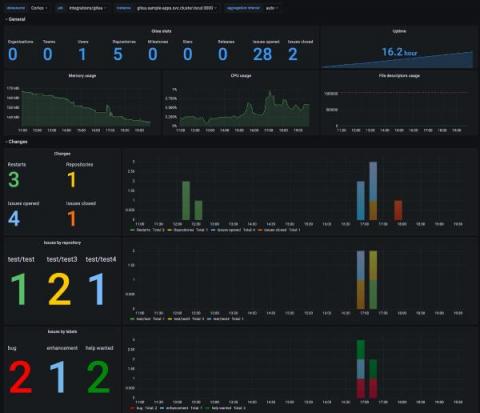
Managed self-hosted Git service Gitea with the new integration for Grafana Cloud

Today I’m back with another integration available for Grafana Cloud, our observability platform that gathers all your metrics, logs, and traces under a single roof with Grafana. I’m going to highlight how you can use Grafana with Gitea, an open source forge software package for hosting software development version control. It uses Git as well as other collaborative features like bug tracking, wikis, and code review. It is a great choice for those who manage Git repositories.

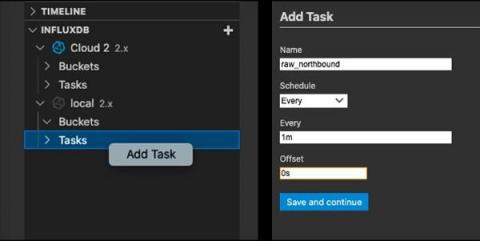
Using InfluxDB as an IoT Edge Historian

InfluxDB is increasingly being used in IoT solutions to store data from connected devices. Now it can also be used on IoT edge gateways as a data historian to analyze, visualize and eventually transmit aggregated IoT data up to a centralized server. In this article we’re going to look at three simple ways you can connect an instance of InfluxDB on your IoT Edge device to another instance of InfluxDB in the cloud.