Operations | Monitoring | ITSM | DevOps | Cloud

Observability Pipelines & AIOps can make IT Smarter

Enterprise data systems are like busy family households. You see a constant flow of activity to varying degrees from room to room. This activity includes people wandering, opening and closing doors. And then there are other streams constantly flowing through the household- electricity, water, Wi-Fi networks and more. In modern enterprises, the data deluge is a critical issue. While we take the complexity for granted in a household, such is not allowed in a connected enterprise.

Why is Distributed Tracing in Microservices needed?

Microservices architecture allows technology companies to build application services around business capabilities. It enables rapid development and also boosts developer productivity. But it also introduces complexity. Troubleshooting and operating an internet-scale application based on microservices is hard. And that’s where distributed tracing comes into the picture. Traditional monolithic application architecture is easy to develop, deploy and monitor.

Observability versus monitoring in software development

To supervise the behavior of distributed applications and track the origin of service failures and downtime, developers often use traditional monitoring technologies and tools. However, this approach can fall short in its ability to measure the overall health of modern cloud-native architectures, which can span multiple hosting environments and encompass hundreds of microservices.

SRE Metrics: Four Golden Signals of Monitoring

SRE (site reliability engineering) is a discipline used by software engineering and IT teams to proactively build and maintain more reliable services. SRE is a functional way to apply software development solutions to IT operations problems. From IT monitoring to software delivery to incident response – site reliability engineers are focused on building and monitoring anything in production that improves service resiliency without harming development speed.

How to Get Started with Heroku Logging

Heroku is a platform for deploying, running, and managing applications, which is written in a variety of programming languages, including Python, Java, C#, JavaScript, PHP, and others. Heroku's goal is to free you up to focus on your applications rather than infrastructure management. Logging is usually included in infrastructure management. Heroku provides a high-level log maintenance tool. In this Heroku logging article, we'll learn how to get the most out of Heroku logs.

Icinga Feedback Week 2022 - The results

We started the Feedback Week, because we wanted to hear what your thoughts around the Icinga Universe are. Whether it is about Icinga as a company, the products or the Community: in order to know what you feel and think about Icinga, we can develop the best possible monitoring tool for you. So here we are, recently finished off the second Feedback Week with a total of nearly 1300 votes all over Social Media and the Community!

What is Kafka Monitoring?

Apache Kafka is a distributed messaging system that can be used to build applications with high throughput and resilience. It is often used in conjunction with other big data technologies, such as Hadoop and Spark. Kafka-based applications are typically used for real-time data processing, including streaming analytics, fraud detection, and customer sentiment analysis. There are many derivatives such as Confluent Kafka, Cloudera Kafka, and IBM Event Streams.

Why Right-Sizing in the Cloud is Everything

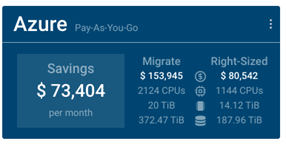
Are you migrating to Azure or another public Cloud? A client of ours did, and they didn’t use Galileo Cloud Compass. Do you know what happened? They didn’t experience the savings they expected, and their Azure invoices were a lot more than expected—about 60% more. There are a couple of reasons for this. One is that they didn’t have an accurate way to price their workload for the Cloud. Just think about understanding the pricing model for each of the major Cloud vendors!

Galileo Enhancements for Brocade Data Collection

Are you migrating to Azure or another public Cloud? A client of ours did, and they didn’t use Galileo Cloud Compass. Do you know what happened? They didn’t experience the savings they expected, and their Azure invoices were a lot more than expected—about 60% more. There are a couple of reasons for this. One is that they didn’t have an accurate way to price their workload for the Cloud. Just think about understanding the pricing model for each of the major Cloud vendors!