Operations | Monitoring | ITSM | DevOps | Cloud

Grafana Labs founders on the future of observability and how to scale an open source company

“Overwhelming.” It was the only word Grafana Labs CEO and Co-founder Raj Dutt could use to describe how it felt to look out at the sea of more than 600 Grafanistas gathered together in Whistler, British Columbia, for the first company-wide employee event in two years.

Unified Observability is the Solution IT Has Been Waiting For

IT teams have been relying on observability tools to (theoretically) provide intelligence and insights into operating conditions within an organization’s digital infrastructure for years. But most of these tools have come with significant shortcomings that leave IT teams wanting more.

Did You Survive This Week's Microsoft Teams Outage?

Though rare, Microsoft Teams outages can impact the productivity of your entire organization. For IT teams, staying one step ahead of an outage has never been more critical. From the time an outage begins productivity can plummet and IT starts to scramble in the dark to identify who, where and what is impacted and why. Below we unpack this week’s outage and outline the difference that deep Microsoft Teams monitoring can make.

A Practical Overview of APM Tools

In today’s tech-savvy world, apps not only add value to your brand but are also required to deliver fast responses and real-time problem solving with 24/7 availability. If your business relies on software applications for day-to-day operations, application performance monitoring (APM) is critical. APM tools allow you to pinpoint performance issues quickly, ensuring peak app performance.

Supporting Developers with Fit-for-Purpose APM Solutions: A CTO's Perspective

Founded in 2015 with a mission to “empower eCommerce businesses to deliver a top-notch customer experience,” Gorgias is a multi-channel eCommerce helpdesk service for small to medium businesses. Among their core values are ownership, excellence and a customer-first mindset, and CTO and co-founder Alex Plugaru understood from day one that, for engineering teams to be successful, the tools he set them up with had to facilitate that.

What is Azure Active Directory?

Azure Active Directory (Azure AD) is a comprehensive cloud-based platform used around the world. It is an identity provider and access management service. If a company employs OneDrive, Skype, or Outlook, they are already using Azure in some capacity. Similarly, if a company uses Microsoft Teams or other applications in the Microsoft Office Suite, they are accessing them by logging into Azure AD.

Authors' Cut-Debugging with the Core Analysis Loop, and What to Build vs Buy

In the old days, the most senior members of an engineering team were the best debuggers. They had built up such an extensive knowledge about their systems that they instinctively knew the right questions to ask and the right places to look. They even wrote detailed runbooks in an attempt to identify and solve every possible issue and possible permutation of an issue.

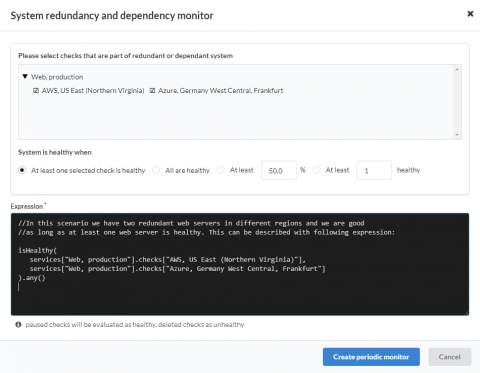
System redundancy and dependency monitor

With latest AppBeat release you can now access unique and powerful new feature which allows you to define custom monitoring expression for any workflow. Possible use cases: Expression examples: As you can see this framework is very flexible and allows you endless new monitoring options which were previously not possible. Happy monitoring!

StackPod: Making Customers Successful With Martin Lako of StackState

A while ago, we asked our customers to write reviews about their experiences working with us. With an average rating of 4.6 out of 5 and ten reviews submitted and published within two weeks, we were humbled by the responses. As our CEO, Toffer Winslow wrote, “Perhaps the thing I was most proud of…was just how frequently our customers commented on the high quality of StackState employees they interact with and the caliber of service we deliver.”

Five Blind Spots Solved Through Observability

“Too many cooks spoil the broth.” It’s an old saying we’ve heard many times in childhood. If we put it in today’s IT monitoring context, we could change it to “too many tools spoil the insights and efficiency.” IT teams across organizations have deployed multiple tools over the decades to monitor and track the performance of networks, databases, and applications and to ensure the smooth running of the business.