Operations | Monitoring | ITSM | DevOps | Cloud

Get to the Good Stuff

This video blew us away. In 15 seconds, Frito-Lay illustrated the deliciousness of Tostitos® Salsa comes down to 3 simple, wholesome ingredients with transparent packaging that enhances the flavor experience. With ultimate visibility, you can see the quality right through the jar. Man, we couldn’t stop talking about the genius of it all. We boiled that 15 seconds down even further. “3 ingredients. Chop, chop. Yum, yum.” (By my count, that’s 8 seconds)

6 Popular End User Monitoring Tools in 2021

Before we dive into the comparison details, let's define end-user monitoring; it is monitoring the customer’s behavior or actions while using an application. Monitoring customer behaviors helps you analyze your application and improve it. In that way, it directly improves your business, i.e., happy customers mean more business. End-User monitoring tools also analyze how your application deployment and delivery affect your user experience.

How to Monitor PHP-FPM with Prometheus

PHP is one of the most popular open source programming languages on the internet, used for web development platforms such as Magento, WordPress, or Drupal. In addition to all PHP bases, PHP-FPM is the most popular alternative implementation of PHP FastCGI. It has additional features which are really useful for high-traffic websites. In this article, you’ll learn how to monitor PHP-FPM with Prometheus.

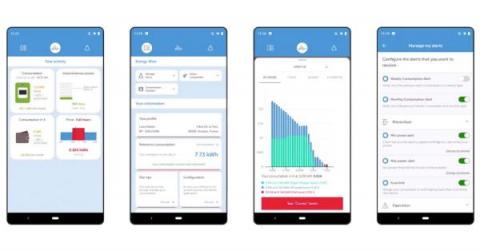
Real-Time Energy Management with InfluxDB and eSoftLink IoT Platform

Smart energy IoT platforms are empowering consumers to track energy usage and even control spend based on their next bill’s forecast. Yet eSoftThings, a specialist in the Internet of Things (IoT) and artificial intelligence (AI), set out to push smart energy management even further, for both consumers and utility companies, through its IoT platform eSoftLink.

How to Scale with DX UIM's Monitoring Configuration Service, Part 1: Introduction

For today’s IT operations teams, the stakes keep getting higher and demands only intensify. The services these teams are responsible for managing play an increasingly critical role in the prospects of the business, which means optimizing service levels is an absolute imperative. Meanwhile, the environments in play only seem to keep getting larger, more complex, and more dynamic. Given these factors, monitoring is a task that keeps getting more vital and more difficult.

AWS AppSync as a Gateway to Your Cloud Infrastructure

When you build modern cloud-based systems, you usually realize quickly that you need to manage the access to your deployed resources. This is especially true with serverless systems, where you often end up with dozens of resources, even for medium-sized architectures. AWS offers a few services you can use to set up a central entry point to your infrastructure. Elastic Load Balancer, API Gateway, and AWS AppSync. This article will discuss AppSync, AWS’s managed GraphQL service.

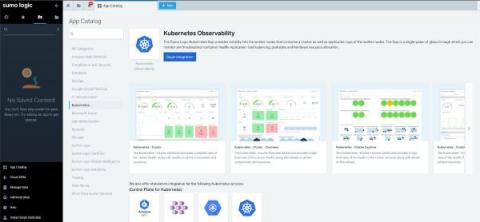
How to gain Kubernetes visibility in just a few clicks

Enterprises are increasingly adopting Kubernetes for the value that it brings to their organizations, from IT cost savings to improved time to market for application development. But with this shift comes a fundamental challenge: how to gain comprehensive visibility into your Kubernetes applications, when most existing monitoring tools are hard to scale or provide little or no visibility into Kubernetes? This challenge stems from two unique characteristics of Kubernetes. One, it is ephemeral.

Releasing Icinga Director Branches

Many Icinga users favour the Icinga Director to manage their Icinga configuration. Icinga Director comes with many features to enable you to create and modify Icinga configuration through the web interface. One outstanding feature of Icinga Director is the Activity and Deployment log. It tracks every configuration change and allows you to see who changed what at which time. You can roll back to older versions of your configuration at any time.

IPv4 vs IPv6 - What are the Differences?

An IP (Internet Protocol) address is a numerical label which is used for addressing he location and identification of the network interface for the devices connected to the computer network. The most used and popular IP version is IPv4 which uses 32-bit for IP addresses. Since the IPv4 became popular and the IPv4 addresses are getting depleted, Ipv6 is now used which uses 128-bit for the IP addresses.

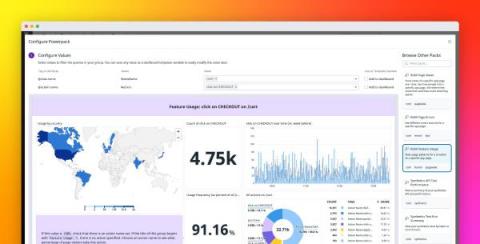
Save and share reusable dashboard widget groups with Powerpacks

Dashboards allow you to visualize and correlate monitoring data from across disparate data sources, technologies, and infrastructure components to understand what’s going on in your environment. In a growing organization, it’s paramount to standardize how teams build their dashboards to ensure their consistency and legibility.