Operations | Monitoring | ITSM | DevOps | Cloud

How Apache Arrow is Changing the Big Data Ecosystem

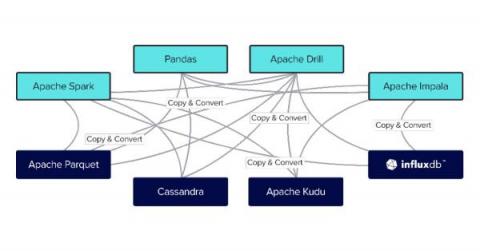
This article was originally published in The New Stack and is reposted here with permission. Arrow makes analytics workloads more efficient for modern CPU and GPU hardware, which makes working with large data sets easier and less costly. One of the biggest challenges of working with big data is the performance overhead involved with moving data between different tools and systems as part of your data processing pipeline.

Cloud Providers Health Report - December 2022

Check our December 2022 health report on the top most popular cloud providers. We analyze the health of the cloud providers based on the number of outages and problems during the month. The source of the data is made available by the cloud providers themselves via their status page. We normalize it and use it to generate the report.

Kubernetes and the Service Mesh Era

Kubernetes is a game-changer for enterprise organizations. Automating deployment, scaling, and management of containerized applications allows organizations to embrace a cloud-native paradigm at scale and more easily employ best practices, such as microservices and DevSecOps. But as with all tech, Kubernetes has its limits. Kelsey Hightower famously tweeted that “Kubernetes is a platform for building platforms. It’s a better place to start; not the endgame.”

How to use the Grafana Ansible collection to manage Grafana Agent across multiple Linux hosts

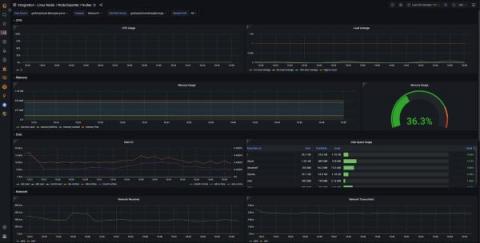
Anyone who is trying to set up monitoring for multiple machines knows how tough it can get to manage multiple Grafana Agents across them. To make things easier, we recently added the Grafana Agent role to the Grafana Ansible collection, which will help users manage the Agent across multiple Linux hosts. (Need to know how to get started with the Grafana Ansible collection for Grafana Cloud?

Best practices to prevent alert fatigue

As your environment changes, new trends can quickly make your existing monitoring less accurate. At the same time, building alerts after every new incident can turn a straightforward strategy into a convoluted one. Treating monitoring as a one-time or reactive effort can both result in alert fatigue. Alert fatigue occurs when an excessive number of alerts are generated by monitoring systems or when alerts are irrelevant or unhelpful, leading to a diminished ability to see critical issues.

Cron Job Monitoring Beta - Because scheduled jobs fail too

Do your cron jobs (aka scheduled jobs) ever fail or not run as expected? Scheduled jobs are supposed to be predictable – as the name implies. But as with many things, predictable!= reliable. Cron jobs fail too and we think you should know when that happens, Crons allows you to monitor the uptime and performance of any scheduled, recurring job in Sentry. Once set up, you’ll get alerts and metrics to help you solve errors, detect timeouts, and prevent disruptions to your service.

Is An APM Solution Worth The Investment?

Application performance monitoring (APM) solutions are a crucial tool for modern software companies in 2023. They offer invaluable insights into application performance, including response times, error rates, and more. But are they worth the investment? In this article, we'll dive deep into the economics of application monitoring, including the costs, benefits, and potential ROI.

The Reality of Machine Learning in Network Observability

For the last few years, the entire networking industry has focused on analytics and mining more and more information out of the network. This makes sense because of all the changes in networking over the last decade. Changes like network overlays, public cloud, applications delivered as a service, and containers mean we need to pay attention to much more diverse information out there.

The Year of the Observability Pipeline

As we begin the new year, it is customary to reflect and identify areas we can continue to grow in 2023. Whether it’s joining the local gym, starting a new diet, or taking up a new hobby, this time is always full of promise to continually improve. The same can be said for digital businesses of every size and across every vertical. Macroeconomic trends have especially made this time one of reflection for a number of organizations.

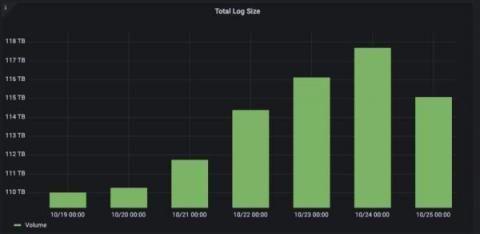
4 billion logs, 120 TB of data: How Just Eat Takeaway.com uses Grafana Cloud to scale

In 2017, Just Eat Takeaway.com (JET) was transitioning from a scrappy startup to a surging scaleup. With a global customer base and workforce, the food delivery marketplace’s front line teams needed to scale the real-time monitoring of the platform. Their initial efforts looked like “NASA’s mission control with Grafana dashboards,” said Senior Technology Manager Alex Murray.