Operations | Monitoring | ITSM | DevOps | Cloud

The latest News and Information on Monitoring for Websites, Applications, APIs, Infrastructure, and other technologies.

Dash 2019: Guide to Datadog's newest announcements

At Dash 2019, we are excited to share a number of new products and features on the Datadog platform. With the addition of Network Performance Monitoring, Real User Monitoring, support for collecting browser logs, and single-pane-of-glass visibility for serverless environments, Datadog now provides even broader coverage of the modern application stack, from frontend to backend.


What Is User Activity Monitoring?

User Activity Monitoring (UAM) tracks the behavior of internal end-users—employees, subcontractors, partners, and so on—on a company’s networks, devices, and other IT resources. UAM, sometimes also called employee monitoring, may be deployed for a number of reasons, such as providing insight into the productivity of both individual employees and the company as a whole. Is Employee X spending too much time browsing the internet for non-business purposes during work time?

How We Migrated To Turbolinks Without Breaking Javascript

It's 2019, so we decided it was time to take a more modern approach to the Honeybadger front end. We implemented Turbolinks! This is only the first step on an ambitious roadmap. In 2025 we plan to migrate to Angular 1, and we'll finish out the decade on React unless we run into any roadblocks! But let's get real. Honeybadger isn't a single page app, and it probably won't ever be. SPAs just don't make sense for our technical requirements.

OpManager bags gold-listed in Feedspot's top networking blogs and sites to follow in 2019

Great news! The OpManager blog has ranked #15 in Feedspot’s top 100 networking blogs and websites to follow. This is a particularly big deal for ManageEngine as we focus on creating valuable content for IT admins, and to be recognized for that confirms we’re headed in the right direction.

Ask Us Anything: How to Alias Dashboard Variables in Grafana in SQL

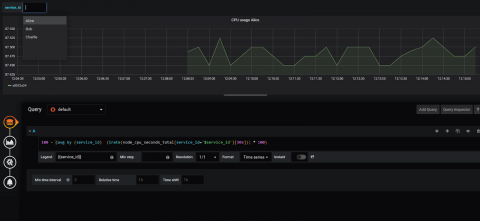
Recently a question came up from a customer, and I was surprised we didn’t have an easy answer for it: How can you translate some esoteric ID or serial number, such as fe03-s3-x883, into a user-friendly name such as “harry” or “alice”? In a regular templating language, it would be easy to do via a map file or similar, but to do this with Grafana is a little more complicated.

Signal Sciences brings real-time web attack visibility to Datadog

Signal Sciences is proud to announce our integration with the Datadog platform. This integration furthers our mission of producing the leading application security offering that empowers operations and development teams to proactively see and respond to web attacks—wherever and however they deploy their apps, APIs, and microservices.

GripMatix releases new Citrix MP

At Squared Up we frequently get asked about Citrix monitoring and dashboards, especially by customers who aren’t paying for the premium ‘Citrix Platinum’ license and so don’t have access to SCOM management pack from Citrix. That’s why we were very excited to hear that there is a new SCOM management pack for monitoring Citrix.

Building Sentry: Source maps and their problems

Welcome to our series of blog posts about all the nitty-gritty details that go into building a great debug experience at scale. Today, we’re looking at the shortcomings of source maps. Other than Python, JavaScript is the oldest platform that Sentry properly supports, which makes sense considering many Python services (including Sentry itself) have a JavaScript front-end. As the popularity of transpiling grew, the need for tools to debug transpiled code in production became obvious.

Coming Soon: Seamless and Cost-Effective Meta Tags for Metrictank

One of the major projects we’re working on for Metrictank – our large scale Graphite solution – is the meta tags feature, which we started last year and are targeting to release in a few months. A lot of people don’t realize this, but Graphite has had tag support for more than a year. Our mission with Metrictank is to provide a more scalable version of Graphite, so introducing meta tags was a logical next step.