The latest News and Information on Monitoring for Websites, Applications, APIs, Infrastructure, and other technologies.
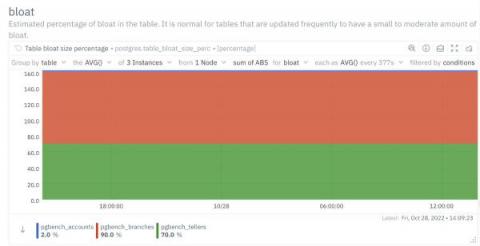
Database bloat is disk space that was used by a table or index and is available for reuse by the database but has not been reclaimed. Bloat is created when deleting or updating tables and indexes. Here's how to deal with it!
Hopefully by now you’re taken your first sip of Elastic RUM, or real user monitoring, and see the power of searching through traces and the User Experience metrics to gain insights into how users actually use and experience your application. One issue you may have experienced is the challenge of finding the source of errors for minified JavaScript files.
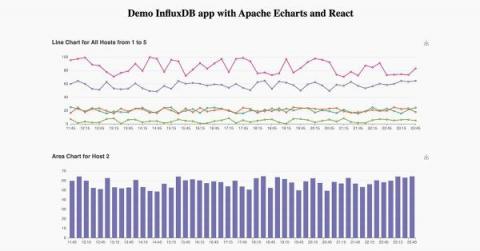
How to set up a basic React app, query data from InfluxDB Cloud and use the queried data to populate results using Apache ECharts.
cAdvisor (container advisor) is an open-source container-monitoring platform developed and maintained by Google. It runs as a background daemon process for collecting, processing, and aggregating data into performance characteristics, resource usage statistics, and related information about running containers. With built-in support for Docker and literally any other container type out of the box, cAdvisor can be used to collect data on virtually any type of running container.
Being a network admin of an enterprise network, you know better than anyone how disastrous network downtimes might be. The cost of downtime study conducted by Gartner in 2014 found that network downtime costs $5,600 per minute on an average, but this number can range from $2,300 to $9,000 per minute. With organizations moving towards sophisticated networks built on hybrid infrastructures, network downtimes are becoming more frequent and costly.
Hybrid cloud has become a popular computing model in recent times. Find out all you need to know, including its features, pros and cons As computing needs evolve, enterprises continuously find it difficult to scale their business offerings on private or on-premises computing environments. That’s why there are third-party or public cloud providers to enable businesses to carry out larger computational workloads.