Operations | Monitoring | ITSM | DevOps | Cloud


The latest News and Information on DevOps, CI/CD, Automation and related technologies.
Is Alert Fatigue Hindering Your DevOps Work?
This year, you tell yourself, you are going to be prepared! You will arm yourself with a new status page, and create web monitoring for every important service in your arsenal. Like the proverbial Eye of Sauron, nothing will escape your omnipotence. But too many tools in your set can contribute to alert fatigue. Alert fatigue occurs when your team starts to feel like they are always on call. They might already secretly feel this way.
Monitoring vs Observability: Can You Tell The Difference?
Monitoring vs observability – is there even a difference and is your monitoring system observable? Observability has gained a lot of popularity in recent years. Modern DevOps paradigms encourage building robust applications by incorporating automation, Infrastructure as Code, and agile development. To assess the health and “robustness” of IT systems, engineering teams typically use logs, metrics, and traces, which are used by various developer tools to facilitate observability.
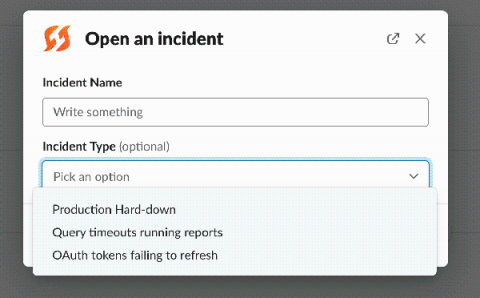
New Feature: Incident types
Incidents are inevitable, and the reality is some of them are inevitably going to repeat themselves. FireHydrant has always strived to make the entire incident response lifecycle smooth, but up until today, common incident types were slightly burdensome for our customers. We decided it was time to help people make it easy to declare incidents using easy-to-use templates, which we’re deeming Incident types.
Canonical & Kubernetes: 2020 highlights
Contact our Kubernetes team We’re now well into 2021, and as we plan ahead for our roadmap and activities around Kubernetes for the year, it helps to look back and reflect on everything that took place for Canonical in the K8s space within the year that passed. Kubernetes has always been a crucial part of Canonical’s vision and contribution to the IT world.
The State of Chaos Engineering in 2021
Five years ago today, our co-founders launched Gremlin with a simple but bold mission: Build a more reliable internet. Over the past five years, the practice of Chaos Engineering is increasingly employed as a means for proactively testing systems to make them more resilient and reliable.
MyLife Digital: Cultivating DevOps culture in a hybrid environment with Datadog

How to set AWS S3 Bucket Read Permissions with Relay
Cloud environments are susceptible to security issues. A big contributor is misconfigured resources. Misconfigured S3 buckets are one example of a security risk that could expose your organization’s sensitive data to bad actors. Policies and regular enforcement of best practices are key to reducing this security risk. However, manually checking and enforcing security is time-consuming and can fall behind with all the demands a busy DevOps team faces every day.