The latest News and Information on DevOps, CI/CD, Automation and related technologies.
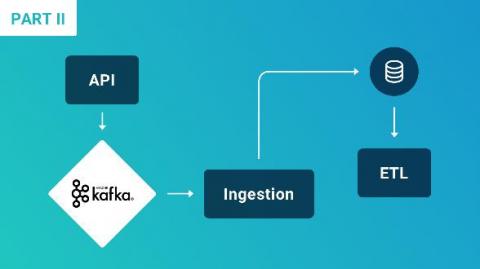
April 7th, 2020 • By Jon de Andrés Frías In the first part of our series of blog posts on how we remove technical debt using Apache Kafka at Rollbar, we covered some important topics such as: In the second part of the series, we’ll give an overview of how our Kafka consumer works, how we monitor it, and which deployment and release process we followed so we could replace an old system without any downtime.
If you are familiar with minikube, a lightweight implementation of the Kubernetes ecosystem, then you may have also heard of Minishift. Designed as a development platform and delivered through a utility, this is the Red Hat OKD (Origin Kubernetes Distribution—formerly called OpenShift Origin) all-in-one implementation of Red Hat OpenShift. Being highly versatile, it can be deployed on varying platforms.
In times of crisis and challenge, the best in humanity comes out. We all want to help, we all want to pitch in and we all desire safety and health for our loved ones and communities. And we ideally want to assist genuinely – in a way that helps others without strings attached. JFrog is no different.
Moving applications to a public cloud, no matter why you’re making that journey, is a high-stakes proposition. As an industry, we’re focused on rapidly moving forward to give our businesses the competitive edge they need. However, when it comes to cloud migration, we often fail to stop and ask some critical questions, and as a result we end up overspending and underperforming.
Kafka is a distributed, partitioned, replicated, log service developed by LinkedIn and open sourced in 2011. Basically it is a massively scalable pub/sub message queue architected as a distributed transaction log. It was created to provide “a unified platform for handling all the real-time data feeds a large company might have”.Kafka is used by many organizations, including LinkedIn, Pinterest, Twitter, and Datadog. The latest release is version 2.4.1.
If you’ve already read our guide to key Kafka performance metrics, you’ve seen that Kafka provides a vast array of metrics on performance and resource utilization, which are available in a number of different ways. You’ve also seen that no Kafka performance monitoring solution is complete without also monitoring ZooKeeper. This post covers some different options for collecting Kafka and ZooKeeper metrics, depending on your needs.