Operations | Monitoring | ITSM | DevOps | Cloud

The latest News and Information on Cloud monitoring, security and related technologies.

7 Top Cloud Diagramming Tools

There has been so much uproar about cloud computing in recent years, mostly due to its scalability, capability, and accessibility. Cloud computing is designed to provide constant access to data and applications for users, allowing them to have high bandwidth. Cloud architecture pertains to the diverse components, such as servers, software functionalities, and software solutions, used by all businesses to harness the efficiency of cloud resources.

Edge Computing vs. Cloud Computing and What It Means For Your Environment

For decades, network administrators have tried to combine and centralize compute power. And the premise behind cloud computing was to delegate your data storage, analytics, and computing intelligence to some remote data center instead of or in addition to these resources remaining solely on-premises. Nowadays, increased processing power is combining with increased demands on response time to reverse the process. This blog post will dive deeper into the resulting trend, called edge computing.

Optimizing BAM Performance with API Management

In a previous article, I discussed how you could use API Management as a proxy for the Serverless360 BAM API. In the real world, I have used this approach a few times because I prefer it to the custom connectors that you can use with Logic Apps which are sometimes painful to use from a DevOps perspective and have known performance limitations that can affect the latency and throughput for connections Logic Apps make to Cloud Services.

Qovery now supports AWS STS: Protect your resources with temporary access keys

We are excited to announce that Qovery now supports AWS Security Token Service (STS) for all our plans! AWS STS is a web service that enables you to request temporary, limited-privilege credentials for AWS Identity and Access Management (IAM) users or for federated users who sign in using Single Sign-On (SSO). These credentials are then used to access AWS resources and services.

Metrics For Investigating Network Performance Issues

When the world went remote in March 2020, cloud technologies made work possible. Rapid digital transformation changed everyone’s jobs, whether in-office, remote, or hybrid. Today, your business relies on network speed for everything from productivity to customer service. Keeping your company’s services running means you need to make sure you have low-latency connectivity across data centers, users, and cloud.

Sponsored Post

Operations Management Is More Than Incident Management

To many, incident management and operations management may seem similar though they differ significantly. This difference, which lies in their end goals, also suggests that operations management is much more than incident management. To better understand why, it helps to look at the purpose of each one.

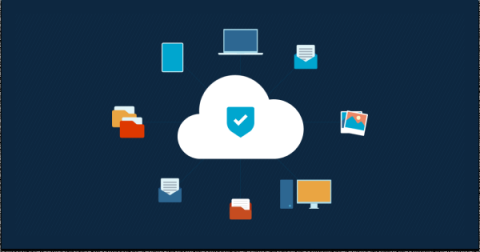
The Differences Between Cloud Backup vs. Cloud Sync & Storage

Today, businesses rely on the cloud to help with many tasks, from data backup to team collaboration. In fact, Zippia’s 2022 cloud adoption statistics reveal that 94% of enterprises use cloud services, and 48% of businesses choose to store their most important data in the cloud.” Discover the differences between cloud backup vs. cloud sync and storage in this post.

Optimizing Azure Cost with Azure Cost Management

Enterprise use of Microsoft’s Azure Cloud Services is expanding at an unprecedented rate as cloud computing usage expands. However, enterprises that have recently switched to Azure continue to have serious concerns about Azure cost efficiency. Managing the costs associated with Azure cloud infrastructure differs from reducing the cost of an on-premises server because Azure cloud infrastructure can be built as needed, typically outside the control of a traditional IT department.