Mailchimp
Not subscribed to OpsMatters Newsletter


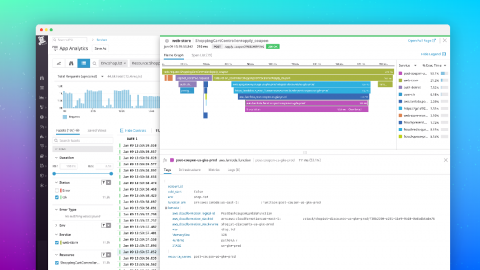
Digital Experience Monitoring (DEM) is a growing practice within IT organizations that provides insight into the factors that make up the overall application User Experience (UX). As systems become more complex, as cloud adoption continues to grow, and IT loses direct control of infrastructure, it becomes both more difficult and more important to capture the overall end-user experience.
Since AWS Lambda was launched in 2014, serverless has transformed the way applications are built, deployed, and managed. By abstracting away the underlying infrastructure, developers are able to shift operational responsibilities to the cloud provider and focus on solving customer problems.
An IT service desk is an integral part of an organization’s IT operations. It’s relevant for entities of all sizes, and plays a key role in making sure that IT services meet key business objectives. In an organization, a service desk also acts as a catalyst for digital transformation, which is a major trend affecting almost every industry. In a recent report from Forturum, 41.4% of their respondents (companies) had a dedicated digital transformation team.
PromQL is the querying language that is part of Prometheus. In addition to PromQL, Prometheus provides a scraper that fetches metrics from instances (any application providing metrics) and a time series database (TSDB), which stores these metrics over time. This introduction to PromQL will be largely decoupled from specific tools and the non-PromQL parts of Prometheus, in order to focus on the features of the language itself.
Today, we will dive into one of the hard parts of using any monitoring - making sense out of all the data that is emitted. We think this is one of the hard parts. And being developers building for developers, we think a lot like you do – we think. Pun intended. Nowadays, we monitor AppSignal with AppSignal (on a separate setup), so we are still dogfooding all the time. We still run into challenges as you do, often before you.
Monitor Kubelet is key when running Kubernetes in production. Kubelet is a very important service inside Kubernetes’ control plane. It’s the component that cares that the containers described by pods are running in the nodes. Kubelet works in a declarative way by receiving PodSpecs and ensuring that the current state matches desired pods.
For those who don't know me, I'm a former SCOM admin, and I blog regularly about monitoring and co-organise Experts Live India each year. As one of SquaredUp's tech evangelists, I've recently taken on the task of figuring out Azure Monitor and documenting my journey so that others can find my — sometimes torturous — journey less taxing. This write-up is for you, hope you enjoy!