Mailchimp
Not subscribed to OpsMatters Newsletter


The widespread shift to remote working in response to the COVID-19 pandemic has been a disruptive change for countless businesses; some 13% of organisations say they have faced major disruption. But at Canonical, remote working has long been the status quo for many of our teams. In spite of the challenging circumstances in which we all find ourselves, Canonical has been able to continue to operate and support our customers despite their working practices undergoing significant changes.
What makes your company show excellent results for customers and stakeholders? Of course, it’s a high professional level of every worker and soft skills to communicate with colleagues and clients. Finally, it’s essential to find a robust project management software that will make your workflow smooth and robust. Nowadays, project managers use it to avoid misunderstandings, missed deadlines, and financial problems.
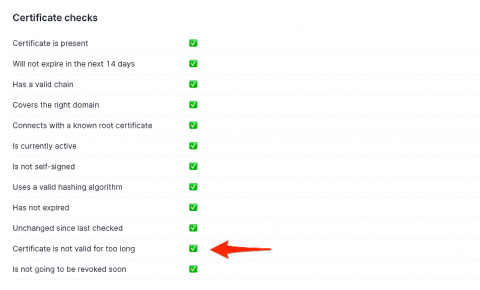
Earlier this year, Apple announced that it would limit the lifetime of trusted certificates to 398 days. Shortly after, both Firefox and Chrome followed in their footsteps.
Working with the right AWS provider can make or break a company, but many companies discover that after a few years, what was once a great fit just doesn’t work anymore. Over time, your needs change, and the provider you’ve been with for years might not be able to provide what you need. Alternatively, maybe your AWS provider simply isn’t living up to your expectations, or perhaps your company is looking to redesign their cloud infrastructure. When this happens, what are your options?
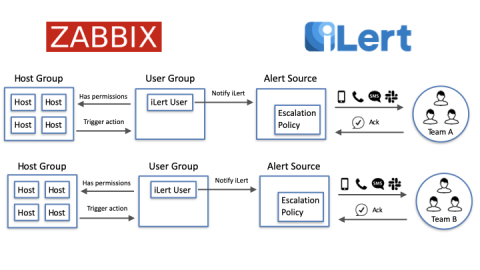
This post outlines how to use Zabbix and iLert with multiple on-call teams, where each team is responsible for a set of host groups in Zabbix, and therefore, will only receive alerts for the services it is responsible for. But first, let’s start with the basic needs when being on-call.
When looking at an EBS volume in CloudWisdom, you’ll notice that in addition to the metrics we collect from AWS, we also create a number of computed metrics, one of which is netuitive.aws.ebs.iopsutilization. Simply put, IOPS Utilization compares the current number of IOPS that the disk is performing against the total IOPS capacity, and expresses this as a percentage. Thus, if you are currently running 1050 IOPS against a volume whose capacity is 3000 IOPS, the IOPS Utilization would be 35%.
Page loading speed is the total length of time that it takes for a website to load completely. With regard to effective SEO, page loading speed is crucial. If your website does not load quickly, visitors to your site are likely to leave rather than wait for it to load, and search engines will penalise your site’s rank if it performs poorly.
Gear up! The ITOM Podcast is back with an all new episode intended to help you surmount all your remote work challenges in an IT environment. In the last episode, we discussed VPN monitoring in detail, the challenges encountered while monitoring VPNs, and the key metrics to track to overcome those challenges. This week, we will deep dive into endpoint security and BYOD policies.