Mailchimp
Not subscribed to OpsMatters Newsletter


Kubernetes is a game-changer for enterprise organizations. Automating deployment, scaling, and management of containerized applications allows organizations to embrace a cloud-native paradigm at scale and more easily employ best practices, such as microservices and DevSecOps. But as with all tech, Kubernetes has its limits. Kelsey Hightower famously tweeted that “Kubernetes is a platform for building platforms. It’s a better place to start; not the endgame.”
Executives have a difficult task ahead of them: innovating against a backdrop of global uncertainty. To minimize the possibility of disruption, they’re seeking business strategies that enable them to cut costs while pursuing ambitious projects at scale. This might seem like more of a paradox than a balancing act. However, some executives are meeting their goals with global business services (GBS).
Check our December 2022 health report on the top most popular cloud providers. We analyze the health of the cloud providers based on the number of outages and problems during the month. The source of the data is made available by the cloud providers themselves via their status page. We normalize it and use it to generate the report.
With less than one month to go, we are counting the days until our first Civo Navigate event in Tampa Bay, Florida. Mark Boost, CEO of Civo, recently explored the motivation behind Civo Navigate, what attendees can expect, and the industry reaction in our blog. If you're joining us for the event, why not check out the Synapse Florida Summit? You can use code "CIVO" to get a 10% discount on all Synapse Summit tickets here.
When people think of home security they usually think of an alarm system with a keypad next to the door. These days, however, home security should have two meanings. I’m here to talk about the second: cybersecurity. In other words, security in the smart home.
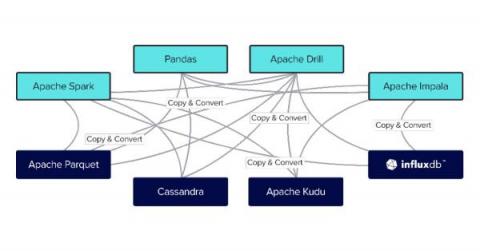
This article was originally published in The New Stack and is reposted here with permission. Arrow makes analytics workloads more efficient for modern CPU and GPU hardware, which makes working with large data sets easier and less costly. One of the biggest challenges of working with big data is the performance overhead involved with moving data between different tools and systems as part of your data processing pipeline.
From one designer to another, you should know why Playbooks is a fantastic addition to your design tool belt. Playbooks were designed with technical workflows in mind, from incident response to release management, but its flexibility makes it a perfect fit for any repeated process. I love it for creating reusable templates of design checklists and an excellent way to do design review sign-off.
Brick by brick, block by block—if you’ve been with us throughout our Author’s Cut blog series (and if you haven’t, you can go catch up), you’ve seen us build the case for observability from the ground up. We’ve covered structured events, the core analysis loop, and use cases for managing applications in production—and that’s just to start.
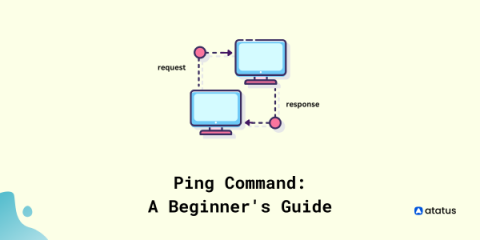
One of the most continually used tools by network administrators is the ping command. Over a half-century has passed since it was unleashed, and unsurprisingly, it has proven effective in troubleshooting networks. Testing the availability of a networking device on a network (mostly computers) can be done by employing the ping command. In order to check the connectivity between hosts and servers, the PING (Packet Internet Groper) command is utilized.