Mailchimp
Not subscribed to OpsMatters Newsletter


AJ Stuyvenberg is a Staff Engineer at Datadog and an AWS Serverless Hero. A version of this post was originally published on his blog. In AWS Lambda, a cold start occurs when a function is invoked and an idle, initialized sandbox is not ready to receive the request. Features like Provisioned Concurrency and SnapStart are designed to reduce cold starts by pre-initializing execution environments.
Imagine you start a new hobby — let’s say bike riding. You don’t want to invest a lot in a bike because you’re not sure that you’ll like it. Luckily, you snag a free bike from a friend — it’s clunky, but the price is right. You start out with short rides around your neighborhood and eventually find yourself riding every day, going on longer and longer rides. Your free, heavy bike is holding you back.
Having a strong full-stack observability has become increasingly crucial in modern IT environments, as organizations strive to gain deep insights into their systems’ behavior, performance and overall health. However, achieving effective observability can be challenging without the right tools and strategies in place. In this article, we will explore the key challenges associated with observability and how Coralogix can help overcome those issues.
Your organization depends on reliable network and endpoint security to ensure that all data is handled, stored, and protected properly. Generally, a comprehensive network security plan includes anti-virus software, access management, zero-trust policies, and endpoint security tools, among other things. A Firewall is considered to be one of the most important components of a network security plan.
Cloud storage involves storing your data on a server that belongs to a third-party cloud service provider (CSP) rather than on-premises. Because many CSPs have large numbers of servers available, it tends to be more cost effective to pay a recurring fee for off-site storage rather than storing all of your files locally. Additionally, many organizations use cloud backups to save space in local storage and to improve accessibility and availability.
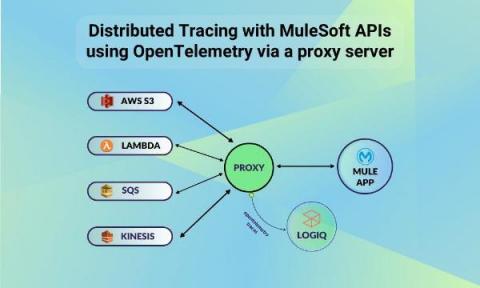
In the previous article, we talked about Distributed Tracing with MuleSoft APIs using OpenTelemetry. In this post, we’ll go through the process of integrating Distributed Tracing with MuleSoft APIs using OpenTelemetry via a proxy server. The purpose of this article is to demonstrate how we can instrument a legacy mule app with open telemetry without making changes to the existing app. Here, we’re showing an example of getting data from a header as well as a query parameter.