Webinar: Squared Up 4.4 Release
Join our CPO John Shaw and Senior Engineer Matthew Long for an in depth look at the latest bug fixes, quality improvements and cool features in Squared Up 4.4.


When you look at an X-Ray trace for a Lambda cold start, you will see an Initialization subsegment. This subsegment represents “the function’s initialization code that is run before the handler”. This is where the runtime would resolve any dependencies, or initialize global variables. These are executed only once, so they don’t have to run on every invocation. The more dependencies you have, the longer this initialization step takes.
Digital Enterprise Journal’s (DEJ) research shows that organizations view cloud strategies as key areas for using technology to create business value. Organizations are seeing the importance of cloud deployments in each of the following areas of digital transformation - agility (71%), innovation (65%) and cost optimization (61%). The majority of cloud deployments are being conducted in a hybrid model where parts of IT services are being managed on-premises and in private and public cloud(s).
One of the most common complaints we hear from operations and site reliability engineers is about the quality of life impacts and the resulting stress imposed by their on-call responsibilities. Most of us are already aware that a proper on-call rotation is critical to our engineering organization’s health in terms of both immediate incident response and long-term sustainable growth.
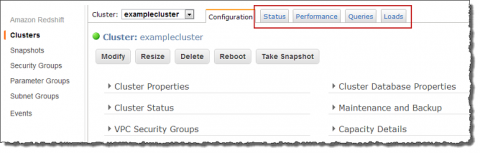
In the first post of our three-part Amazon Redshift series, we covered what Redshift is and how it works. For the second installment, we’ll discuss how Amazon Redshift queries are analyzed and monitored. Before we go deep into gauging query performance on Redshift, let’s take a quick refresher on what Amazon Redshift is and what it does.
If you’ve been writing code for any reasonable amount of time, then it’s virtually impossible that you haven’t handled logging in any way, since it’s one of the most essential parts of modern, “real life” app development. If you’re a .NET developer, then you’ve probably used some of the many famous logging frameworks available for use at this platform. Today’s post will cover one of these frameworks: log4net.
Gartner once wrote that by 2020, “the average person will have more conversations with bots (chatbots) than with their spouse”. That prediction might seem a bit farfetched and probably more of a sign for relationship disaster, but there is some truth there: for many people chatbots are already an integral part of modern-day life. From turning on the lights, to picking our favorite songs and ordering food—we use chatbots for almost everything and expect them to work all the time.
Fluent Bit is a lightweight, multi-platform tool that can collect, parse, and forward log data from several different sources. Because Fluent Bit has a small memory footprint (~450 KB), it is an ideal solution for collecting logs in environments with limited resources, such as containerized services and embedded Linux systems (e.g., IoT devices).