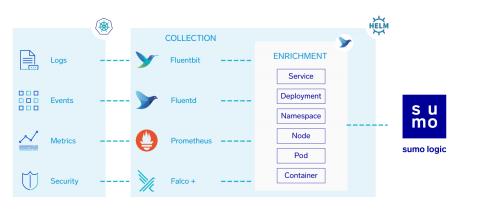
Kubernetes DevSecOps with Sumo Logic
With Sumo Logic, we can put all of these pieces together to build end-to-end Observability in Kubernetes.


With Sumo Logic, we can put all of these pieces together to build end-to-end Observability in Kubernetes.
Ask two developers whether SOAP (Simple Object Access Protocol) or REST (Representational State Transfer) is better for accessing web services and you’ll likely get two different answers – and maybe more. It’s a passionate debate, but the reality is that the best solution depends on the application. Let’s take a look at these two options and discuss the main pros and cons.
The constant evolution of security threats has long-since made preventing cyber-attacks and network intrusion attempts a nearly impossible task. Real threats are often hard to identify among a multitude of false alarms, and many experts understand that a well-integrated and fully-automated threat intelligence strategy is the best approach. Nevertheless, 70% of security industry professionals still believe threat intelligence to be too complex and bulky to provide actionable insights.
You know what they say: you can’t fix what you can’t find. That’s what makes log management such a critical element in the DevOps process. Logging provides key information for software developers on the lookout for code errors. While working on their third startup in 2013, Chris Nguyen and Lee Liu realized that traditional log management was wholly inadequate for addressing data sprawl in the modern, cloud-native development stack.
These days, it is quite hard to find a person who does not use the Internet. Even older people have already got a web connection for communication and mastering the most popular apps. This makes the Net such a useful tool. However, certain dangers lay under this cross-functionality that can be avoided using Virtual Private Networks or VPNs for short.
Establishing a performance budget early in the development cycle for websites and APIs is the optimum choice for keeping your websites and web services fast for all users. However, it is never too late to set a web performance budget to improve your user experience. Keeping your users in mind, a web performance budget allows you to make decisions based on your preferred page speed.
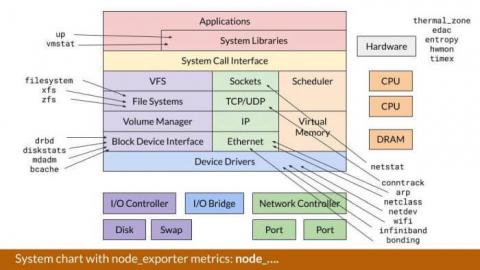
Grafana Labs has 8+ clusters in GKE running 270 nodes of various sizes, and all the hosted metrics and hosted log Grafana Cloud offerings are run on 16-core, 64-gig machines. At the recent All Systems Go! conference in Berlin, David Kaltschmidt, Director, User Experience, gave a talk about what monitoring these clusters and servers looks like at Grafana Labs and shared some best practices.
Let us first agree on a couple of things before we start: One, Android is the most affordable platform for enterprises with a mobile-first/mobile-only workforce, and it has the smallest learning curve of any mobile OS. Two, due to its very open-source nature, Android is easy for malicious actors to pray on, with the Google Play Store being the breeding ground for many attacks.
The team at Chrome has announced their plans for handling mixed content last week on their blog. We'll highlight the most important details and what the potential impact is.