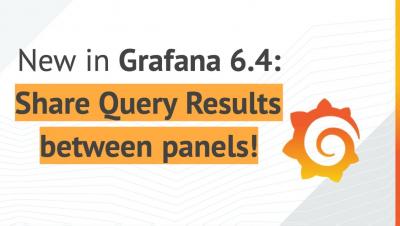
Share Query Results Between Panels In Grafana 6.4
Get the latest Grafana release here: https://grafana.com/get


More than a decade ago, a small piece of code that would eventually be called Sentry was born. When I wrote this code, I didn’t know much about open-source, so when it came down to licensing, I just grabbed the first reasonable suggestion thrown my way. That suggestion happened to be the BSD 3-Clause License. Fast forward to today, and a lot has changed.
It’s a new world order: Skynet has taken over. Just kidding. But it sometimes feels that way, doesn’t it? In the words of Marc Andreessen, software is eating the world, and technology problems are now business problems. This means developers are now the architects of the digital experience and, by extension, the customer experience—and when said developers are unable to innovate quickly, companies are more exposed to competitive threats.
Unexpected events make the healthcare profession one of the most challenging industries to navigate and plan for. Sudden, abrupt patient situations tend to occur, increasing the workload of healthcare providers. Similar, process efficiencies and productivity are a reflection of the care team’s ability to communicate. When teams are on the same page, patient wait times are significantly reduced and results are improved.
Nowadays, it’s not uncommon to see enterprise IT leaders in a situation that seems like a catch 22. Oftentimes, they are expected to be involved in making data-driven decisions for augmenting productivity and profitability. Paradoxically, they are preoccupied with what they consider as their core responsibilities – applying best practices to safeguard the IT infrastructure and expediting investigations when incidents occur.
You can’t really blame most people for thinking employee surveys are a lost cause. Survey fatigue is a real thing, and every organization has its unique red tape when it comes to data collection and HR policy. If you can even manage to convince your employees to respond to that well-crafted questionnaire, how do you separate the signal from the noise and operationalize this information for ITOps?
Logz.io was born out of a frustration with the realities of managing an open source monitoring and troubleshooting stack across distributed systems at cloud scale. Today, we introduce another tool to streamline log mamagement: Log Patterns.