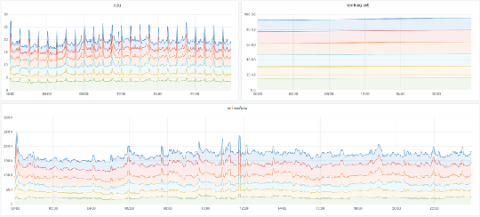
Jaeger primarily supports two backends: Cassandra and Elasticsearch. Here at Grafana Labs we use Scylla, an open source Cassandra-compatible backend. In this post we’ll look at how we run Scylla at scale and share some techniques to reduce load while ingesting even more spans. We’ll also share some internal metrics about Jaeger load and Scylla backend performance. Special thanks to the Scylla team for spending some time with us to talk about performance and configuration!
Time trolls people. It speeds up in good times and slows down in bad. For instance, when you push code, your brain feels like it’s in a whirlwind. But when you’re debugging subsequent errors, the hours seem to slog by. This is particularly true if you are operating without context and without the help of automation. Fortunately, our friends at GitHub built an automation platform for products like Sentry to integrate with: Sentry Release GitHub Action.
As the automation surface area grows to accommodate hundreds of interconnected APIs on the cloud, developers are using their own, home-grown “digital duct tape” to manage a growing “DevOps dumping ground”. For a lot of organizations, home-grown glue logic is inconsistent, not repeatable, and expensive to maintain hundreds of event-based workflows and thousands of combinations. We believe that the answer lies in automation workflows.