Operations | Monitoring | ITSM | DevOps | Cloud

Introducing AI Agent Deployment in Harness Continuous Delivery | Harness Blog

‍Teams building agents have converged on something that looks a lot like the software development lifecycle, but reshaped around a system whose output isn't deterministic: prototype an agent against a framework, evaluate it against a dataset of expected behavior, deploy it somewhere real, observe how it behaves against live traffic, and feed what you learn back into the next prototype. Call it the agent development lifecycle (Agent DLC).

Don't add a read replica until you've read this

As the size and complexity of their relational database workload grows, every company eventually goes through the process of off-loading work on a read replica. It comes with lots of benefits, but at a cost of increased complexity. This article is about how we dealt with that, a lot of learnings, and some useful techniques. incident.io is an incident management product relied on by thousands of customers to be the thing that supports them through anything from a minor blip to a full outage.

Your AI agents are lost: give them a graph

The biggest limitation facing enterprise AI agents may not be the model. It may be the context surrounding it. Anthony Alcaraz, Senior AI/ML Portfolio Growth Manager at AWS and co-author of O'Reilly's *Agentic GraphRAG*, joins Humans of Reliability to explain why reliable agents need more than a vector database and a large context window. They need structured knowledge they can navigate, memory they can prune, constraints they can follow, and feedback loops that help them improve.

How to structure a log

You’ve decided to step up your logging game and start sending more valuable, structured logs that you can query, aggregate, and use for debugging in production. Go, you! Now, uh, how do you actually write them? We’re not going to spend much time on what you should log. We’ve covered that already, a few times before. What we will be covering is how to actually write those logs, answering questions like: What makes a log structured is not just pairing messages with arbitrary JSON objects.

Security at Scale: What Changes When Everyone Can Deploy using AI

In our first series post, The New Software Creator, we mapped out a structural shift in the industry: AI is turning non-technical team members into creators of software. In our second post, When Anyone Can Build Software, Deployment Governance Is What Keeps It Safe, we argued that deployment is the single control layer that can secure this explosion of output without choking innovation.

Let's break autovacuum in Postgres: reproducing failures to make it observable

Autovacuum is one of those Postgres background jobs that quietly keeps your database healthy. It cleans up the dead row versions that every UPDATE and DELETE leaves behind, and it keeps the database away from a hard transaction-ID limit that would take it offline. Most of the time you don't think about it, because it just works.

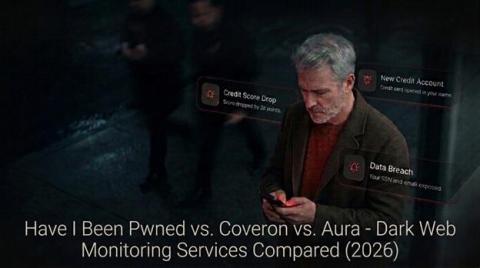
Have I Been Pwned vs. Coveron vs. Aura - Dark Web Monitoring Services Compared (2026)

Have I Been Pwned, Coveron, and Aura solve the same underlying problem in very different ways. Have I Been Pwned answers a one-time question for free, and the two paid services are built for continuous monitoring and recovery of individuals and households. Comparing them head-to-head only makes sense once you separate what a free breach checker does from what a paid identity service is for.

B2B payment ops for exporters and agencies

Exporters and agencies rarely deal with simple payments. A single project may involve several stakeholders, large invoices, international clients, different currencies, and long approval cycles. A delay at any point can influence the flow of cash and create extra manual work. A modern b2b payment gateway is only one part of the solution. Strong B2B payments depend on reliable payment operations and the right payment setup. This guide explains how to build a payment process that helps businesses get paid faster, reconcile invoices more easily, and minimise constant follow-ups.

How to Choose the Perfect Phone Case Without Compromising Style or Protection

Smartphones have become central to both our personal and professional lives. We use them to communicate, work, capture memories, navigate unfamiliar places, and manage daily tasks. With so much depending on a single device, protecting it is no longer just a precaution-it's a practical investment. At the same time, most people don't want a bulky case that hides the look and feel of their phone. The ideal phone case should offer dependable protection while reflecting your personal style and supporting the way you use your device every day.