Operations | Monitoring | ITSM | DevOps | Cloud

Preparing for CIP-015: Building Operational Resilience Through Visibility, Detection, and Segmentation

Utility organizations preparing for CIP-015 should think beyond compliance. The organizations that will be best positioned are those investing in comprehensive network visibility, continuous operational intelligence, and segmentation to strengthen cyber resilience and operational continuity. This article explains what CIP-015 means, why it matters, and how Teneo helps utilities build a practical roadmap toward operational resilience.


Share packages across your workspace with internal packages

We launched Bitbucket Packages to give teams one place to manage code, pipelines, and artifacts, and we’ve been expanding it ever since, first with Maven and npm, then PyPI and NuGet. Every one of those packages has shared one trait: it lives inside a single repository and inherits that repository’s permissions. Most of the time, that’s exactly what you want. But it also means sharing a package across repositories has meant granting people access to source code they never needed to see.

How to Optimize Cloudflare Connectivity for Performance, Cost, and Control

Learn why adding a dedicated network edge between Cloudflare and your cloud can deliver faster, more predictable, cost-efficient traffic. There was a time when every user first connected to the corporate network before accessing business applications. The network perimeter was well defined, and IT controlled it; security was centralized behind firewalls, VPN concentrators, and proxy servers. Today, that perimeter no longer exists.

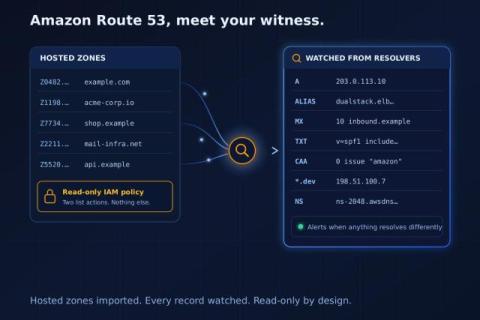
DNS Spy Now Connects to Amazon Route 53. Read-Only, Every Record, Always in Sync.

When we launched DNS provider sync with six providers, one name came up in nearly every "what about..." email: Amazon Route 53. That makes sense. Route 53 runs DNS for an enormous share of production infrastructure, and it does not support zone transfers — so until now, monitoring a Route 53 zone meant relying on autodiscovery's educated guesses. Today that gap closes.

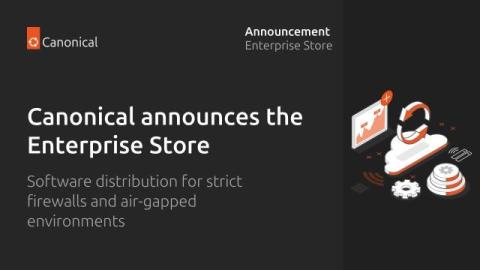
Canonical announces the Enterprise Store as part of Ubuntu Pro

The Enterprise Store makes software distribution manageable and scalable behind firewalls or in air-gapped environments. Available with an Ubuntu Pro subscription, the Enterprise Store respects the security protocols of strict environments, in a way that is controllable, auditable, and predictable.

DRIVE Deep Dive: Vigilance

This is the fourth post in our DRIVE Deep Dive series. Over the coming weeks we're examining each pillar of the DRIVE framework in turn. For the complete model, download the full DRIVE framework. Our last post covered Initiatives. Up next: Efficiency. The bottleneck on writing code is gone, and the industry is responding the way it always does when a constraint disappears: by producing more.

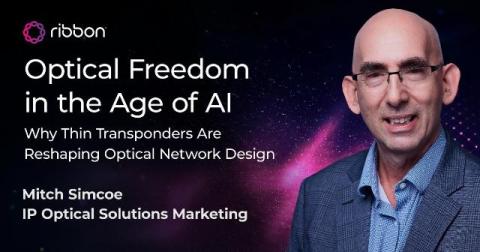
Optical Freedom in the Age of AI: Why Thin Transponders Are Reshaping Optical Network Design

AI is driving the next wave of digital transformation, but it is also creating an unexpected challenge for network operators: optical capacity is becoming a strategic bottleneck. The same AI boom fueling billions of dollars in data center investment is placing unprecedented demand on optical networking infrastructure.

New dcTrack Connector for NetBox

NetBox is an open-source platform used for network infrastructure management and documentation, helping organizations track networks, devices, IP addresses, circuits, and racks. Sunbird’s new NetBox connector programmatically pulls device, port, and cabling data from NetBox into dcTrack using a preconfigured base XML connector, driving automation and giving you a single pane of glass and single source of truth across your entire infrastructure.

From Visibility to Prediction: How AI-Driven Operations Build Trust at Scale

Visibility was once the finish line. Centralized monitoring and correlated logs represented meaningful progress. But hybrid cloud environments continued to expand in scale and complexity. Visibility alone no longer guarantees clarity. Across eleven operator interviews, the recurring challenge was not data scarcity. It was interpretation. Telemetry volumes were abundant. Correlation required manual effort. Alert floods introduced friction. Systems were visible, but the path to decisive action was unclear.

Catch Next.js Hydration Errors With Playwright Tests

Playwright can catch Next.js hydration errors by listening for browser console failures and then exercising an interaction that only works after React has attached its event handlers. This detects pages that return 200 OK and display server-rendered content but fail when a customer clicks, types, or navigates. Next.js defines hydration as React attaching event handlers to the server-rendered HTML.