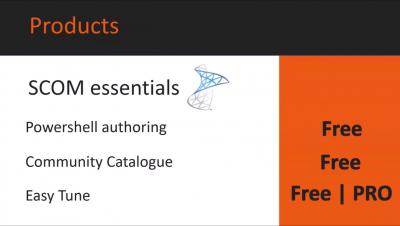
Cookdown Launch Webinar 10 Apr
Webinar recording explaining who is Cookdown and a demo of Easy Tune + Easy Tune PRO including time of day alerting


Last month was busy with several key product updates, events and webinars. OpsRamp EMEA controlled the chaos in Europe with our presence in Cloud Expo Europe London, while the US demonstrated OpsRamp’s bi-directional ServiceNow integration with a webinar, and 451 Research’s latest report recognized the company’s innovations in hybrid cloud management. Here’s a quick snapshot of the news milestones that made the month of March.
Dealing with IT outages and downtime is one of the biggest technical challenges of the modern era, costing North American businesses an estimated $700 billion per year. Today's world of interconnected cloud services and microservice architectures has created infinitely more opportunities for something to go wrong and disrupt service. When that happens, there's an urgent need to alert the right people or teams to fix things.
Ensuring your apps work as designed and deliver a productive user experience starts with monitoring applications metrics. This helps you understand whether your software is performing at optimal levels. Many developers use JBoss (now called WildFly and maintained by Red Hat) to build, deploy, and host transactional applications written in Java.
Being inside a company that lives and breathes logging, observability and DevOps intelligence, sometimes it takes a moment to step back and explain what we do to friends, family and others. The simplest way we explain what LogDNA solves for companies with IT systems and software is similar to a blackbox on a plane that keeps a record of the flight data and the cockpit voice recorder.
As infrastructure has evolved and matured over the last decade, the way in which we build and deploy that infrastructure has — for the most part — kept pace. As the velocity of deployments increased, and practices such as continuous deployment and delivery became the norm, it became critical that we manage infrastructure and deploy applications in a similar way.
If you’ve ever checked your page performance in our free Website Speed Test tool, you’ve seen a list of optimizations from Google Insights that when implemented improve your site’s performance leading to a better user experience and higher conversion rates.
Google Cloud Run is a new compute platform for running stateless containers without having to manage the underlying infrastructure. You can choose between a fully managed version of Cloud Run, or run container workloads in your existing Google Kubernetes Engine (GKE) clusters with Cloud Run on GKE.