When I started Checkly, all the typical SaaS things around billing, credit cards and prorating confused the hell out of me. I understood them from an intellectual point of view, but not really from an implementation point of view.
It is 5 a.m. Tuesday. The ETL job that populates revenue data into your organization’s data warehouse fails midway through the process. When the CFO opens the mobile dashboard to review the last day’s results, he immediately notices that the data is wrong – again. For a few hours, the on-call ETL Architect determines what caused the data-load failure, fixes the issue, and restarts/monitors the job until it successfully completes.
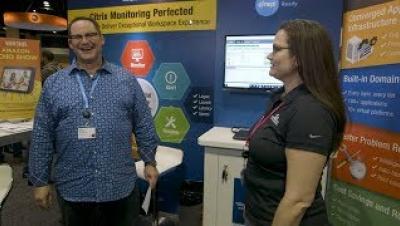
Our recent webinar on Stop Swivel-Chair IT Operations with OpsRamp and ServiceNow ITSM featured Curt Thorin, Solutions Strategist and Jordan Sher, Director of Corporate Marketing. The webinar addressed the challenge of managing alerts and remediating incidents at scale and how the right automation and ITSM integration investments (powered by AIOps) are helping enterprises address the problems of alert storms and service degradations.
SaltStack is an open source configuration management tool that lets you manage your infrastructure as code. Using SaltStack, you can manage tens of thousands of servers remotely using either a declarative language or imperative commands. It’s similar to configuration management tools such as Puppet, Chef, and Ansible.
If you even partly believe Marc Andreessen’s 2011 “software is eating the world” comment, it stands to reason that companies who are good at software will be the winners in a digital world. Given this, I find it ironic that little large-scale research has gone into what it takes to be good at software.
The Linux Audit framework is a kernel feature (paired with userspace tools) that can log system calls. For example, opening a file, killing a process or creating a network connection. These audit logs can be used to monitor systems for suspicious activity.
Simple enough to be embedded in text as a sparkline, but able to speak volumes about your business, time series data is the basic input of Anodot’s automated anomaly detection system. This article begins our three-part series in which we take a closer look at the specific techniques Anodot uses to extract insights from your data.
Scenario Linux has a number of built-in tools, commands and files which can track and store information about every user activity. These tools are common in most Linux distributions and can be used to investigate suspicious logins or failed login attempts into the system. In this article, we will talk about some of the initial methods to identify possible security breaches. We will use an Amazon EC2 instance to show these commands.