Operations | Monitoring | ITSM | DevOps | Cloud

The Place Where Modern Operations & Technology Come Together

The latest News and Information on CyberSecurity for Applications, Services and Infrastructure, and related technologies.

Single Sign-On Configuration Using SAML
Learn how to configure Single Sign-On (SSO) with SAML on Uptime.com to streamline your login process and enhance security. This step-by-step guide will walk you through the setup!

Enhancing Integration Environments and Security
In this episode join Mattias and his co-founder from DevOps Solutions as they explore the challenges and innovations in managing integration environments. Learn how their company helps organizations improve security, maintainability, and continuous improvement through deep analysis and actionable insights.
IGEL Redefines Ransomware Recovery: Instant Business Continuity, No Device Shipping
When Malware Strikes, Minutes Matter: IGEL BC/DR Empowers Organizations to Restore Secure Access and Productivity-Even During an Attack.
N-able Strengthens Security Capabilities with Advanced Detection of Sophisticated Data Threats
Anomaly Detection as a Service helps customers defend against attacks targeting backup environments.

Logstash Alternative: Why Security Teams Are Choosing Modern Data Pipelines
Logstash has been a workhorse in data processing pipelines for years, but it was not designed with today’s security operations in mind. Security teams now deal with massive telemetry volumes, rising SIEM costs, and diverse log formats that require constant normalization. In this environment, Logstash shows its age: manual configuration, outdated parsing, and scalability bottlenecks introduce fragility instead of efficiency.
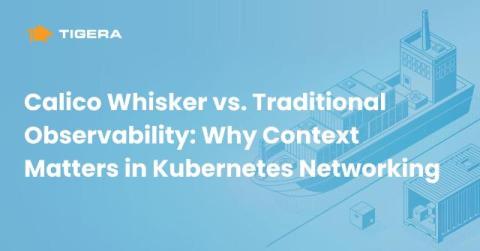
Calico Whisker vs. Traditional Observability: Why Context Matters in Kubernetes Networking
Are you tired of digging through cryptic logs to understand your Kubernetes network? In today’s fast-paced cloud environments, clear, real-time visibility isn’t a luxury, it’s a necessity. Traditional logging and metrics often fall short, leaving you without the context needed to troubleshoot effectively. That’s precisely what Calico Whisker’s recent launch (with Calico v3.30) aims to solve. This tool provides clarity where logs alone fall short.

How Smart Technology Is Making Mental Health Care More Personal
Mental health technology is transforming how we access and receive care in a time when it's desperately needed. According to the National Institute of Mental Health, nearly one in five U.S. adults (57.8 million people) live with a mental illness, yet only about 50% receive proper treatment. This treatment gap has prompted innovative solutions that make support more accessible and personalized.

Why Doctors Now Recommend Wearable Technology for Elderly Parents
Wearable technology for elderly parents is becoming increasingly vital as we face an unprecedented demographic shift. By 2050, the global population of individuals aged 65 and older is projected to reach nearly 1.5 billion. This number has been projected to rise from 46 million in 2016 to over 98 million by 2060 in the United States alone. These statistics highlight why we need innovative solutions for senior care.

E-Commerce and Device Intelligence: Fighting Fraud Before Checkout
E-commerce has become one of the most dynamic sectors of the global economy, yet its rapid expansion has also created fertile ground for fraud. According to Juniper Research, global losses from e-commerce fraud are expected to surpass $107 billion annually by 2029.