Operations | Monitoring | ITSM | DevOps | Cloud

The latest News and Information on Monitoring for Websites, Applications, APIs, Infrastructure, and other technologies.

How to Monitor AWS Elastic Beanstalk with CloudWatch

AWS Beanstalk allows you to spin up entire environments (EC2 instances, ELBs, etc.) to support an application without you having to configure the resources manually. However, since it’s a managed service, you have less visibility with traditional monitoring tools. As such, it becomes even more important to take advantage of the available monitoring tools in AWS. In this post, we’ll explain how to use CloudWatch to monitor Beanstalk and what is important to watch.

Synthetic Monitoring

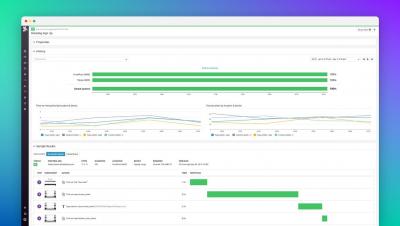
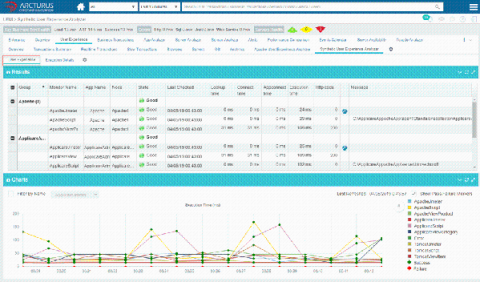
Synthetic Monitoring is referred to as an approach of testing a web service or a website by simulating the website visitors’ requests across various geographies in order to test its availability and performance. One can compare performance stats of different geographies and formulate performance improvement plans. Synthetic monitoring lets you find problems before your customers do leading to shorter MTTR.

Deploy Kubernetes on Raspberry Pi cluster with k3s

In order to carry out a demonstration of our smart tool: the Bleemeo agent at the 8th Devoxx France conference planned for the 17th of April, Bleemeo team decided to use the Kubernetes infrastructure and specially the lightweight version of Kubernetes: k3s. We choose to run k3s on a cluster of 3 Raspberry Pi nodes composed of 1 master node and 2 slaves nodes.

Savings with monitoring: what costs will my company save?

Are you the type of person who wonders why things happen? When you were a child, did you look into the clouds when it rained and wonder what was the mechanism behind it? This is an intelligent attitude. We cannot go through life relying only on chance and our intuitions; sometimes it is convenient to ask ourselves about things before doing them, especially when it comes to making some important decisions.

How to collect, customize, and analyze PHP logs

PHP logs are not just about errors. You can use logs to track the performance of API calls and function calls, or to count the occurrence of significant events in your applications (e.g., logins, signups, and downloads). Whether you’re operating a microservices architecture or a monolith, implementing a comprehensive PHP logging strategy will allow you to track critical changes in your applications and optimize their performance.