The latest News and Information on Monitoring for Websites, Applications, APIs, Infrastructure, and other technologies.
Distributed tracing is a household term nowadays – if your house is an IT department! Modern enterprises use cloud-native applications for agility and responsiveness to customer needs. When monitoring cloud-native applications, distributed tracing follows how transactions perform while traversing services or containers in the backend architecture. By definition, we’re describing production applications with requests, methods, database calls and logs that accompany a transaction.
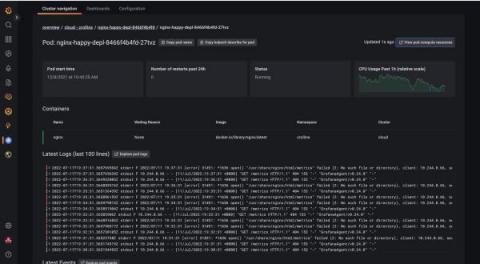
Have you ever experienced user complaints and struggled to find the root cause of the performance degradation? I'm sure every IT operations professional has. Is it the application? Is it the underlying infrastructure? Is it the network? What if you have a single pane of glass that will gather all the relevant metrics and telemetry and display it in an intuitive and easy to understand fashion?
As more and more organizations adopt cloud-native technologies, the need to align business objectives and end-user experience with IT infrastructure’s availability and performance is ever-growing. This trend requires infrastructure monitoring setups to ensure that all of your systems are active and working together across your cloud environments, host operating systems, storage systems, etc.
The majority of monitoring and management solutions used in enterprises provide their customers with APIs (Application Programming Interfaces) and a CLI to facilitate DevOps type workflows. With IaC (Infrastructure as Code) becoming de facto and ubiquitous, decent APIs have long been a must have on product evaluation checklists; there are of course a few exceptions – namely products aimed only at SMB (Small and Medium Business), immature startups, or freeware.