Operations | Monitoring | ITSM | DevOps | Cloud

The latest News and Information on Monitoring for Websites, Applications, APIs, Infrastructure, and other technologies.

Sponsored Post

What CIOs Need to Know About Digital Experience Monitoring

Many enterprises are taking a customer-centric approach to meet customer demands more efficiently and upscale their businesses. However, several siloed communication and workflows within these organisations often make it challenging to achieve the desired experiences for customers. Additionally, the initiatives adopted by the enterprises usually don't provide an extensive understanding of the end users' experiences. The market's answer to this problem is monitoring software. Enter digital experience monitoring.

The Incident Retrospective Ground Rules

I joined Honeycomb as a Staff Site Reliability Engineer (SRE) midway through September, and it’s been a wild ride so far. One thing I was especially excited about was the opportunity to see Honeycomb’s incident retrospective process from the inside. I wasn’t disappointed! The first retrospective I took part in was for our ingestion delays incident on September 8th.

What's New in Sysdig - November 2022

Content What’s New in Sysdig is back again with the November 2022 edition! I am Matt Shirilla, an Enterprise Sales Engineer based in Texas, and I am very excited to update you with the latest feature releases from Sysdig. For Sysdig Monitor, this month brings new filtering for AWS Cloudwatch Metric Streams and a new Lambda Extension for AWS Lambda Telemetry API , plus the release of new Advisories.

Optimize Your NOC with DX NetOps and Automic Automation

Learn how Automic can help NetOps speed up triage, reduce MTTR, and alleviate the load on your NOC Today’s network team is committed to advancing the speed of triage and resolution. This can be a titanic task in modern networks, which are fueled by SDN and becoming more agile and dynamic than ever. These new networks have introduced traffic, congestion, and outages on a greater scale.

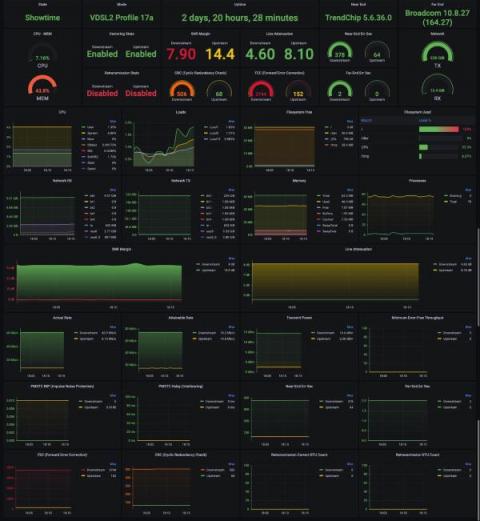
Grafana crosses 1 million mark for active instances

It’s hard to think of a use case that Grafana hasn’t been used for. When Torkel Ödegaard launched the Grafana open source project with his first commit in December 2013, “my goal was to make time series data accessible for a wider audience, to make it easier to build dashboards, and to make graphs and dashboards more interactive,” he said.

The Basics of Using AWS EventBridge for Observability

As you adopt modern, serverless, microservices-based architectures, it can become more challenging to monitor and understand the state of your applications at any given time. That’s where event bus capabilities from services like Amazon EventBridge can come in handy. AWS EventBridge can help you build loosely coupled, event-driven architectures and applications, and deploy new features faster.

Observability vs Monitoring: Which is Better?

Distributed architectures are becoming an increasingly important source of application services for organizations. Advances in observability and monitoring are being driven by this trend. But exactly how do observability and monitoring differ from one another? It's essential to know when something goes wrong in the application delivery chain so you can identify the root cause and resolve it before it has an impact on your business. Monitoring and observability offer a two-pronged strategy.

Understanding N+1 Database Queries

N+1 queries are the most common problems among developers. N+1 database query problems occur when you have to call the database for N items, and those N items have again N additional data fields which are not in the same table, and those extra N data fields are required for the use case. Generally, this issue is handled at the time of database designing, but every problem cannot be solved efficiently by one solution, some need to be solved by brute force.

What's in an instrumentation? An SQS and Python study

At Lumigo, we keep improving the coverage and quality of our distributed tracing instrumentation to give you, through Lumigo’s transactions, the most accurate and intuitive representation of how your distributed system behaves. In this blog, we cover a recent development for the Amazon SQS instrumentation in Lumigo’s OpenTelemetry distro for Python, providing a seamless experience for a scenario that otherwise would result in confusing, broken transactions and lost insights.