Operations | Monitoring | ITSM | DevOps | Cloud

The latest News and Information on Monitoring for Websites, Applications, APIs, Infrastructure, and other technologies.

Benefits of Native MQTT Integration on InfluxDB Cloud

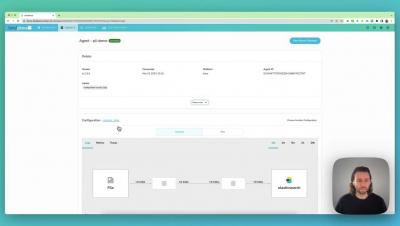
To a great extent, the value of the Internet of Things (IoT) is realized through the insights (data) generated from sensor data integrated in storage and analytics systems. Consequently, how the data integration is conducted directly impacts the success of IoT projects. For this reason, InfluxData introduced Native Collectors to bypass multiple data hops and enable one-step integration of data from data brokers such as HiveMQ MQTT broker into its InfluxDB Cloud time series database.

Receive website change alerts directly to your Slack workspace

When Slack was first launched back in 2013, the idea of using a centralized messaging system hadn’t been around for too long. Why? Organizations and businesses didn’t even know they needed one. Instead, they used different methods and tools to communicate – emails, SMS messaging, Skype for online meetings, etc. How did Slack earn the title of your company’s digital headquarters?

Why is API Observability Better than API Monitoring?

In recent years, there has been a rapid expansion in the API market. Today, every piece of software is either an API or uses one. They are now a crucial component of the modern digital economy. As a result, it is becoming increasingly important to grasp how to examine them carefully. In this article, we'll discuss the definitions of API observability and API monitoring as well as how API observability is better than API monitoring.

How OpManager helps with troubleshooting network issues

IT administrators have the herculean task of monitoring and maintaining the digital networks that keep their businesses up and running. They have to ensure that network discrepancies such as slow response time and low network performance don't affect end users or customers.

Overcoming data challenges in payment monitoring

The total transaction value of digital payments is projected to exceed $1.7 billion by the end of 2022. Each one of these transactions generates masses of data that contains critical insights for merchants, payment service providers, acquirers, fintechs, and other stakeholders in the payments ecosystem. Having real-time access to these insights has the power to drive growth through customer and market understanding.

Maximizing Application Performance: How to Extract Practical Data from Your Network

How many applications do you use that exist only on the computer in front of you? Two? One? None at all? I occasionally use two applications that live locally on my computer, but all the rest, including every application I use for personal and professional work, are delivered over the internet. That’s pretty much where we are these days, isn’t it?

The Hidden Costs of Serverless Observability

The growing popularity of serverless architectures has led to an increased need for solutions to the modern challenges of microservice observability—one of the most critical components for running high-performing, secure, and resilient serverless applications. Observability solutions have to break through the complexity of serverless systems, and with the right stack, observability enables not only fast and easy debugging of applications, but drives optimization and cost efficiency.

Status Page Pricing - 22 Most Popular Status Page Tools Cost Reviewed [2023]

Keeping your customers informed about the status of your website, application, or service is essential nowadays. If you don’t have a status page to communicate this, you’re missing an opportunity to improve transparency and reduce the customer support burden. It is especially true if you are running an online business and your website is your main source of income. The status page is crucial not only for your business but for your customers as well. So how much can a status page cost?

How to Monitor Kubernetes K3s Using Telegraf and InfluxDB Cloud

This article was originally published in The New Stack and is reposted here with permission. A Helm chart can simplify our lives and enable us to see what is happening with our K3s cluster using an external system. Lightweight Kubernetes, known as K3s, is an installation of Kubernetes half the size in terms of memory footprint. Do you need to monitor your nodes running K3s to know the status of your cluster?