Operations | Monitoring | ITSM | DevOps | Cloud

The latest News and Information on Log Management, Log Analytics and related technologies.

Federated Search | From Silos to Insight | AWS S3 Schema Discovery with Splunk-Managed Tables

This walk-through shows how Splunk's crawler, available through the Data Management app, can discover schema and partition keys for S3 backed datasets and create Splunk managed catalog tables. Once the data is mapped, analysts can search AWS S3 data through Splunk and bring it into broader security, observability, and operational workflows.

Eliminate noisy log lines with Adaptive Logs drop rules

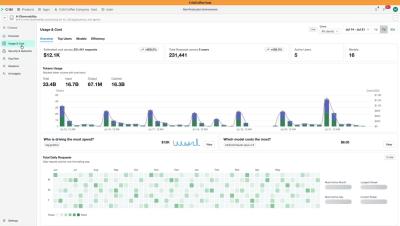
Most platform and observability teams have logs they know are noise. These could be throwaway health check logs, forgotten DEBUG logs, or verbose INFO logs from little used services that only serve to inflate your bill. Regardless of what they contain and why they're there in the first place, the hard part is getting rid of them. Centralized teams want to easily and quickly prevent these logs from being ingested, without having to work with toilsome infrastructure change management to do so.

How one partnership powers search for over 2 million WP Engine users

How do you make search faster, smarter, and more scalable? During our recent webinar, I sat down with Luke Patterson, senior product manager at WP Engine, and Delphin Barankanira, independent software vendor partner engineering lead and data & AI specialist at Google Cloud, to answer that question. We dug into the mechanics behind WP Engine’s ability to deliver near-instant updates to over 2 million users.

Faster OpenTelemetry Migrations from Splunk to SecOps with Bindplane

Many security teams are looking to move off Splunk, whether to reduce licensing costs, consolidate their SIEM, or take advantage of Google SecOps' built-in threat intelligence and YARA-L detection capabilities. But migrations aren’t easy, and no one wants to run blind while they evaluate and move to a new platform. With OpenTelemetry and Bindplane, you can easily make the switch to SecOps without impacting your existing stack.

Elasticsearch 9.4 powers the next phase of the Elastic AI Ecosystem: Dell AI Data Platform with NVIDIA

AI is moving fast. Enterprise adoption needs to move with purpose. Over the past year, one thing has become clear: Organizations are not looking for more AI hype. They are looking for a path to production — one that connects infrastructure, data, and intelligence in a way that delivers real business value. That is exactly what the Elastic AI Ecosystem is built to do. At Elastic, we believe AI is only as powerful as the data foundation behind it. Great models matter.

The cost of knowledge

In the world of observability, “cardinality” has become a heavy word. It is a ghost used to justify skyrocketing bills or degraded query performance. When cardinality rises, the advice is almost always the same: reduce it. Drop your labels, or reduce the dimensions. It is usually framed as “optimization.” Every label you add to a metric is a dimension of knowledge. Each one gives you a way to slice, compare, and explain the chaos of production.

Ep 41: The cost of not thinking: Who's responsible when AI agents get it wrong?

In this episode of Masters of Data, we get into the messier side of AI adoption, tackling questions like who actually owns the output when AI gets it wrong, and whether chasing efficiency is making us forget what it means to be human in the first place. We discuss tech CEOs proudly announcing they no longer think for themselves and debate whether AI is quietly eroding our critical thinking skills. We make the case that purpose-built, narrow AI is genuinely exciting, but that no efficiency gain is worth losing the human touch that makes work, connection, and creativity meaningful.

Observability vs Monitoring: What's the Real Difference in 2026?

Understand the real difference between observability and monitoring — and why modern IT teams in 2026 need both. Monitoring tells you something is broken; observability explains why. See real examples, faster troubleshooting workflows, and how Motadata ObserveOps unifies both in one platform. Don’t forget to like, share, and subscribe for more IT insights.

Introducing the Coralogix CLI: Headless Observability for Every Agent

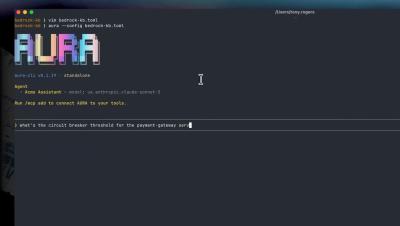
This article is a high-level overview of the Coralogix CLI. For a deeper look at how it works in practice, read the full technical deep dive here. Agent-driven investigation sounds simple: read the alert, query the data, return the cause. In reality, most agents either overload their context window with raw logs or guess at queries and return incorrect results.