The latest News and Information on Log Management, Log Analytics and related technologies.
With Kinesis Firehose being Splunk’s preferred option when collecting logs at scale from AWS Cloudwatch Logs, we’ve seen plenty of posts on setting this up, automation and examples on transforming event content. But what about when things go wrong?
Logz.io has recently launched its Smart Tiering solution, which gives you the flexibility to place data on different tiers to optimize cost, performance and availability. Our mission has been to make Smart Tiering a multi-cloud and multi-region service. As part of this launch, we are glad to announce that the Historical Tier now supports Microsoft Azure Blob Storage, alongside AWS S3.
In this article I’m going to discuss table joins and the let statement in Log Analytics. Along with custom logs, these are concepts that really had me scratching my head for a long time, and it was a little bit tricky to put all the pieces together from documentation and other people’s blog posts. Hopefully this will help anyone else out there that still has unanswered questions on one of these topics.
In this article, I’m going to discuss custom logs in Log Analytics. Along with table joins and the let statement that I discuss in another blog, custom logs is a concept that I struggled to wrap my head around for a long time, as there don’t seem to be very many comprehensive guides out there as of yet. Here is a summary of everything I have managed to piece together from documentation and other people’s blog posts.
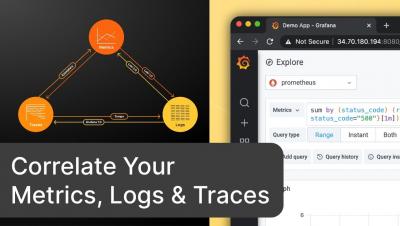
Grafana Cloud is the easiest way to get started observing metrics, logs, traces, and dashboards. When we say “easiest,” we mean it: Grafana Cloud is designed so that even novice observability users can use it. As a new user, you are not required to dive into the complexity of setting up Prometheus and figuring out how to create Grafana dashboards from scratch. Integrations are the reason why.
Elastic solutions solve many different business challenges from powering search bars to creating observable systems to detecting and responding to threats. And with the amount of capabilities each offers, learning how to maximize the power of our solutions for enterprise search, observability, and security is critical to realizing Elastic's full value. But finding the time to build new skills can be challenging.
I hope I’m not alone in starting 2021 with some sense of optimism. While several hard months remain ahead of us, I am hopeful and also expecting that some sense of normality will return by the summer months. Either way, this gives us an opportunity to reflect on the challenges we have faced. 2020 was testing. We learnt a lot about ourselves and our businesses in the most challenging of circumstances.