ON-DEMAND: ScaleUP Security 2021
The latest cloud security news from top security professionals.


The latest News and Information on Log Management, Log Analytics and related technologies.
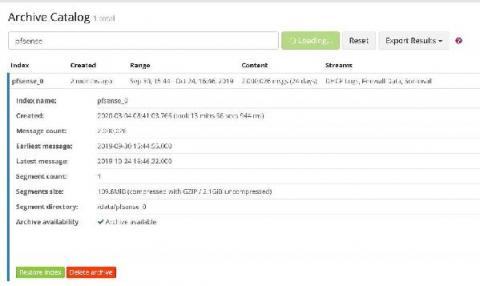
Indices are an important part of Elasticsearch. Each index keeps your data sets separated and organized, giving you the flexibility to treat each set differently, as well as make it simple to manage data through its lifecycle. And Elastic makes it easy to take full advantage of indices by offering ingest methods and management tools to simplify the process.
The hybrid workforce is here to stay. With that in mind, you should start putting more robust cybersecurity controls in place to mitigate risk. Virtual private networks (VPNs) help secure data, but they are also challenging to bring into your log monitoring and management strategy. VPN and firewall log management gives real-time visibility into security risks. Many VPN and firewall log monitoring problems are similar to log management in general.
Microsoft recently announced a campaign by a sophisticated nation-state threat actor, operating from China, to exploit a collection of 0-day vulnerabilities in Microsoft Exchange and exfiltrate customer data. They’re calling the previously unknown hacking gang Hafnium. Microsoft has apparently been aware of Hafnium for a while — they do describe the group’s historical targets.
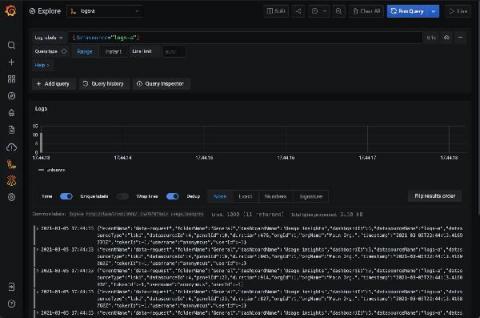
To follow up on our introduction of Grafana Enterprise Logs, the latest addition to the Grafana Enterprise Stack, let’s dig into one of the key features: the admin API and admin plugin. Grafana Loki, Grafana Labs’ log aggregation project, provides the underpinnings of Grafana Enterprise Logs (GEL).
Cloud API logs are a significant blind spot for many organizations and often factor into large-scale, publicly announced data breaches. They pose several challenges to security teams: For all of these reasons, cloud API logs are resistant to conventional threat detection and hunting techniques.