HAProxy Kubernetes Ingress Controller Twice as Fast with Lowest CPU vs. Four Competitors
Head-to-head benchmarking evaluates performance across average requests per second, latency, CPU usage, and HTTP errors


Cloud security is the combination of tools and procedures that form a defense against unauthorized data exposure by securing data, applications, and infrastructures across the cloud environment and by maintaining data integrity. To read more about the basic principles of cloud security, check out our previous article on the subject. Cloud security is a constant concern for R&D teams, and more and more methodologies are being introduced to help teams achieve their goals.
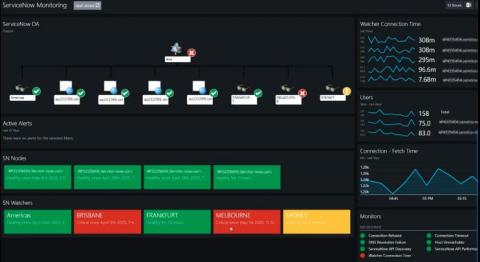
Arup are a global architectural engineering company, behind ground-breaking structures such as: Sydney Opera House, Changi Airport Singapore, Hong Kong Zhuhai-Macau Bridge, and many more. Behind these amazing projects sits a large IT infrastructure, spanning 44 countries, across 3 key regions Americas, UKIMEA & APAC.
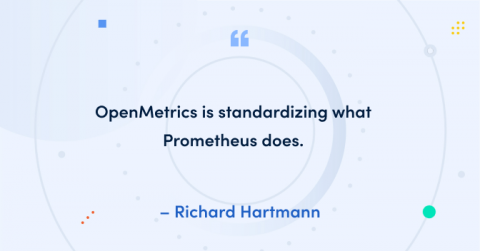
Before Prometheus, the closest thing to a common standard for metrics was Simple Network Management Protocol (SNMP), the internet standard protocol for collecting and organizing information and monitoring networks. Front and center in SNMP is ASN1, which lacks modern design and comes with trade-offs that made sense in the past but not so much today. Aside from that, many of the existing protocols were chatty and slow as well as proprietary, very hard to implement, or both.
Logging is a key requirement of any production application. .NET Core offers support for outputting logs from your application. It delivers this capability through a middleware approach that makes use of the modular library design. Some of these libraries are already built and supported by Microsoft and can be installed via the NuGet package manager, but a third party or even custom extensions can also be used for your .NET logging.
Datadog is an awesome tool for aggregating and visualizing the metrics that matter to you. Recently, Datadog launched a new Incident Management feature, which allows you to coordinate the activities around a problem that affected your service. In this example, I’ll walk through using Relay to roll back a Kubernetes deployment that caused a service impact, and show how the Datadog Incident timeline can keep everyone working on the incident in sync.
An IT self-service portal is much more than an IT storefront. With the consumer-world self-service technology becoming more obvious and available to end-users, it is critical to provide a similar experience with corporate self-service portals. But when it comes to self-service portals, ‘less is more’ doesn’t really work. Who wouldn’t pick a multi-functional portal over the one that is only limited to IT operations?
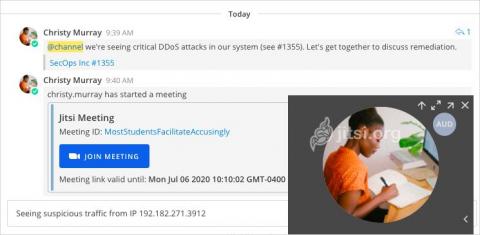
Mattermost and Jitsi—open source, self-hosted alternatives to Slack and Zoom—now integrate! With the Mattermost Jitsi plugin, Mattermost users can now instantly launch secure Jitsi voice, video and screen-sharing calls, either on-prem with the self-hosted Jitsi software or via the cloud with Jitsi Meet.
Compromising a pod in a Kubernetes cluster can have disastrous consequences on resources in an AWS Elastic Kubernetes Service (EKS) account if access to the Instance Metadata service is not explicitly blocked. The Instance Metadata service is an AWS API listening on a link-local IP address. Only accessible from EC2 instances, it enables the retrieval of metadata that is used to configure or manage an instance.