Operations | Monitoring | ITSM | DevOps | Cloud

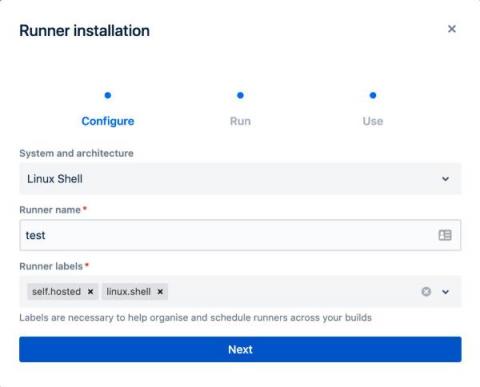
Announcing Linux Shell Runners in Bitbucket Pipelines

We are happy to announce that Bitbucket Pipelines now supports non-containerized Linux Shell Self-Hosted Runners. We have moved from beta to an official release. You can now create a self-hosted runner and run it on your Linux infrastructure without container restrictions. Since it is your infrastructure, you will not be charged for the build minutes used by your self-hosted runner.

Keeping Track of Kubernetes Deprecated Resources

It’s a fact of life: as the Kubernetes API evolves, it’s periodically reorganized or upgraded. This means some Kubernetes resources can be deprecated and later removed. We deserve to keep track of those deprecations and removals easily. For that, we have just released the new deprecated-api-versions policy for Kubewarden, our efficient Kubernetes policy engine that runs policies compiled to Wasm.

Sumo Logic's investment in OTel

When teams collect data without full observability of what others on the team can see, it becomes clear that no one’s picture is truly accurate. In this picture, all of the people are wearing blindfolds and feeling around to see what is in front of them. One thinks this creature is a spear, another thinks it is a tree trunk, and another a rope. As long as they cannot observe what the others can, there is poor data fidelity.

The Importance of Role-Based Messaging in Healthcare

Do you remember the classic board game where you have to go back and forth with your opponent deducing which characters on the board you’ve each selected? It’s still played by children today, and unfortunately by healthcare teams as well. Every day, healthcare teams are forced to play a game of “Guess Who?” is on-call if they do not have systems in place for role-based messaging.

Monitoring Windows 365 Cloud PCs

A new era is here, where cloud computing is taking a growing share of the digital workspace market. Microsoft are well placed to capture an increasing part of this market to deliver digital workspaces to end users to run their business applications. Using Azure as the umbrella we see new Microsoft services arise each year. Last year the Windows 365 service was born with a Cloud PC service offering both Business and Enterprise subscriptions.

How to Monitor MongoDB: Key Metrics to Measure for High Performance

Monitoring distributed systems like MongoDB is very important to ensure optimal performance and constant health. But even the best monitoring tool will not be efficient without fully understanding the metrics it gathers and presents, what they represent, how to interpret them, and what they affect. That’s why it is crucial not only to collect the metrics but also to understand them.

Understanding the Three Pillars of Observability: Logs, Metrics and Traces

Many people wonder what the difference is between monitoring vs. observability. While monitoring is simply watching a system, observability means truly understanding a system’s state. DevOps teams leverage observability to debug their applications or troubleshoot the root cause of system issues. Peak visibility is achieved by analyzing the three pillars of observability: Logs, metrics and traces.

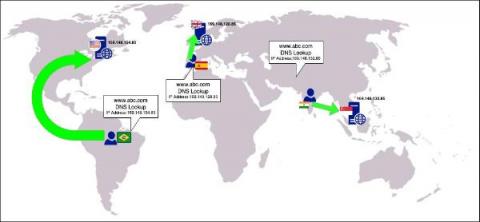
How does GeoDNS work?

Latency is the key differentiator when it comes to application performance on the internet. Reduced latency accelerates the delivery of apps. DNS resolving is the first step towards application delivery and it involves a series of steps. Prior to Anycast DNS, the DNS servers responsible for resolving users’ DNS requests were sitting continents away from many users, contributing to the high latency and slow delivery of applications.