Operations | Monitoring | ITSM | DevOps | Cloud

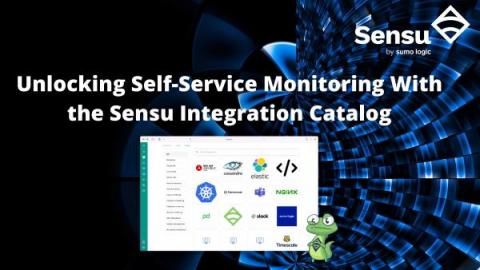
Unlocking self-service monitoring with the Sensu Integration Catalog

Introducing the Sensu Integration Catalog — a marketplace-like UX for simplifying new user onboarding, and deploying production-ready monitoring in a matter of minutes. The Sensu Integration Catalog is also an open marketplace that new and existing users can contribute to by sharing Sensu configurations. Continue reading to learn more!
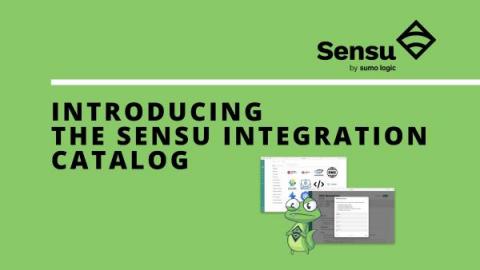

Committed to Open Source - Sumo Logic Simplifies Infrastructure and Application Monitoring Deployments

REDWOOD CITY, Calif. – April 21, 2022 – Sumo Logic (NASDAQ: SUMO), the SaaS analytics platform to enable reliable and secure cloud-native applications, today announced a new open source offering, the Sensu Integration Catalog. Available today on GitHub, the Integration Catalog is an open, self-service marketplace featuring over 40 turn-key integrations.

Measuring Digital Experience with Artificial Intelligence

With the expansion of remote and hybrid workforce and an ever more complex technology set, it is more important than ever to manage the digital employee experience. But how do we measure digital employee experience? One of the most common ways is to use surveys – for example post-incident surveys or annual customer satisfaction surveys. But these surveys, on their own, can be reactive, time-delayed and limited in scope.

The 3-Step Communication Game Plan for a Site Outage (One of Our LEAST Favorite Things)

If those von Trapp Family singers from The Sound of Music collectively woke up in a really, really bad mood and decided to write a song about their least favorite things, then it’s a safe bet that not being able to connect to a website would make the list (alongside airline passengers who tilt their seat back, and clam shell plastic packaging).

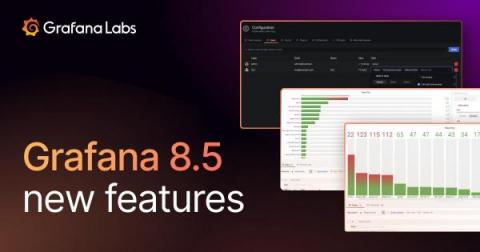
New in Grafana 8.5: updated panels, new RBAC features, simplified reporting, and more!

Grafana 8.5 is here! Download Grafana 8.5 We’ve worked on a variety of improvements that focus on Grafana’s usability, data visualization, and security. For a full list of new features and capabilities, check out our What’s New in Grafana 8.5 documentation. You can get started with Grafana in minutes with Grafana Cloud. We have free and paid Grafana Cloud plans to suit every use case — sign up for free now.

Canonical Ubuntu 22.04 LTS is released

London, 21 April 2022. Canonical Ubuntu 22.04 LTS is now generally available, featuring significant leaps forward in cloud confidential computing, real-time kernel for industrial applications, and enterprise Active Directory, PCI-DSS, HIPAA, FIPS and FedRAMP compliance – raising the bar for open source from cloud to edge, IoT and workstations.

Ask Miss O11y: Baggage in OTel

Miss O11y is delighted to welcome our newest band member: Martin Thwaites! Martin has been a member of the Honeycomb user community practically since its inception. He is a UK-based consultant who specializes in helping teams scale up and tackle challenging business problems, and a long-time contributor to the Azure and.NET communities. We think he looks ✨amazing✨ in a tiara.

We Moved Some Data to S3

When clients make HTTP POST requests to ping URLs, Healthchecks captures and stores request body data. You can use this feature to log a command’s output and have it available for inspection later: Same thing, using runitor instead of curl: You can view the request body data in the web UI: Healthchecks also captures and stores email messages, when pinging by email.

Why is Kubernetes Difficult? - Solve All My Problems K8s!

Another post inspired by our weekly internal enablement office hours [should we open this up to the public?] and a few conversations at DevOps Days Atlanta, talking about the experience with Kubernetes can reverberate some sighs. Though in our weekly enablement office hours, the blunt question was asked “well why is Kubernetes so difficult?”. Industry thought leaders would state that Kubernetes is a platform to build other platforms.

How to Write a Custom Terraform Provider Automatically With OpenAPI

So you’ve just been tasked with creating a Terraform Provider (or maybe upgrading an existing one). As you do your research to prepare for the project, you slowly begin to realize, “well this looks like I’ll just be developing a Terraform specific wrapper for a client of my API.” It’s not particularly difficult, but it seems tedious. Is there a better way to build this? Maybe something that can be modular and automated? A way that’s actually stimulating to implement?