Operations | Monitoring | ITSM | DevOps | Cloud

Why SolarWinds Is Evolving From Monitoring to Observability

At SolarWinds, our purpose is to enrich the lives of the people we serve. In a world where complexity is expanding, our commitment to offer simple yet powerful IT solutions has served us well throughout our more than 20-year history. Today’s pace of digital transformation means businesses are actively building new applications and leveraging multi-cloud deployments, while reworking their existing ones, to achieve operational excellence.

Simplify Your Digital Transformation With Hybrid Cloud Observability

Today marks a significant milestone for SolarWinds, as we’ve formally announced our organizational direction to evolve from our leadership position in monitoring to become a leader in observability. Today is also significant because it marks the official release of our Hybrid Cloud Observability, and I’m excited to share more details on what we believe expands the scope of observability for the market.

How to Speed Up Amazon ECS Container Deployments

Amazon Elastic Container Service (Amazon ECS) is a fully managed container orchestration service that makes it easy for you to deploy, manage and scale containerized applications. Although ECS is a managed service and hides many complexities under the hood, there have been many cases where startups have not been able to take full advantage of ECS due to slow deployments. In this article, we will share some tips to improve deployment speed on ECS. We will try to cover both EC2 tasks and Fargate tasks.

Try Kubernetes 1.24 release candidate with MicroK8s

The latest Kubernetes release, 1.24, is about to be made generally available. Today, the community announced the availability of the 1.24 release candidate. Developers, DevOps and other cloud and open source enthusiasts who want to experiment with the latest cutting edge K8s features can already do so easily with MicroK8s.

The evolution of network visibility

In the old days, it took a bunch of help desk tickets for an engineer to realize there was something wrong with the network. At that time, troubleshooting meant logging into network devices one-by-one to pore over logs. In the late 80s, SNMP was introduced giving engineers a way to manage network devices remotely. It quickly became a way to also collect and manage information about devices. That was a big step forward, and it marked the beginning of network visibility as we know it today.

Why UX Designers Don't Feel Valued-and Why This Is a Problem for Your Business

It’s time we had a real conversation about why UX designers everywhere are still unhappy, why that elusive “seat at the table” feels so impossibly out of reach to so many (even at companies that embrace design), and how this impacts your business Design is facing down an epidemic of designers who feel burned out, taken for granted, marginalized, and disrespected. Yes, there is something different about our experience compared to other disciplines.

How Well Does Your Infrastructure Support Major Incident Management?

Effective major incident management depends on many things, including planning, precise execution, effective communication, and applying learnings from previous incidents to update those plans. Traditional major incident management wisdom addresses the importance of the remediation process, but it doesn’t speak on the issue of configuring your IT infrastructure.

What Is Identity Lifecycle Management?

If you help to manage cloud environments, you’re probably familiar with the concept of identity lifecycle management. Identity lifecycle management helps you keep track of who is allowed to do what within your cloud. But merely understanding identity lifecycle management isn’t enough to administer modern cloud identities effectively. You also need a way to automate identity lifecycle management at massive scale.

Unlocking self-service monitoring with the Sensu Integration Catalog

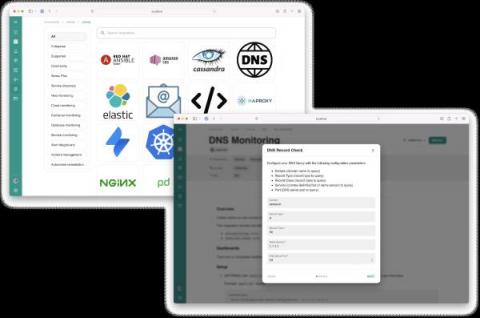
Introducing the Sensu Integration Catalog — a marketplace-like UX for simplifying new user onboarding, and deploying production-ready monitoring in a matter of minutes. The Sensu Integration Catalog is also an open marketplace that new and existing users can contribute to by sharing Sensu configurations. Continue reading to learn more!

Functional vs non-functional software testing

When you think of software testing, what comes up first? For many developers, unit tests and integration tests are often top of mind. Both software testing methods are vital to writing and maintaining a high-quality production codebase. But they are not sufficient on their own. Your team’s testing practice should assess the entire application, observe the larger story of how it operates when functioning correctly, and raise alarms when deviations are found.