Operations | Monitoring | ITSM | DevOps | Cloud

Enterprise vs. SMB IT: What's the Difference?

Enterprises have always had more money to spend on IT than small-and-medium businesses (SMBs). This has traditionally resulted in a disparity in the technology and services available to each. However, with the rise of cloud-based services and the increasing need for remote working, this gap is starting to close. While there are still some differences between enterprise IT management and SMB IT management, the two are becoming more similar.

Using Splunk Observability Cloud to Monitor Splunk RUM

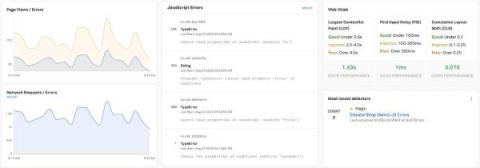
As a principal engineer on the Splunk Real User Monitoring (RUM) team who is responsible for measuring and monitoring our service-level agreements (SLAs) and service-level objectives (SLOs), I depend on observability to measure, visualize and troubleshoot our services. Our key SLA is to guarantee that our services are available and accessible 99.9% of the time.

Middleware 101

In computer science, systems are typically divided into two categories: software and hardware. However, there is an additional layer in between, referred to as middleware, which is a software pipeline—an operation, a process, or an application between the operating system and the end user. This article aims to define middleware and reflect on its necessity, as well as address controversies about when and where it applies.

Monitor your Microsoft Azure VMs featuring Ampere Altra Arm-based CPUs with Datadog

As organizations continue to expand their cloud footprint, managing costs without risking application performance is a priority. Because of this, Arm processors have become popular for their efficient, cost-effective processing power. Microsoft Azure’s new series of Azure Virtual Machines are powered by Ampere Altra Arm-based processors, which provide excellent price performance for scale-out and cloud-native workloads.

Simplify IT Management with Hyperconverged Infrastructure

HCI (Hyperconverged Infrastructure) is changing the way businesses work. For starters, the management and deployments become way simpler with HCI solutions. But that is only the start; proper resource utilization, demandable scalability, exceptional data protection, and so on, the benefits associated with HCI solutions are numerous. But what are HCI solutions? And how the HCI Hyperconverged Infrastructure simplifies IT management. Well, find out answers to these and many more questions related to HCI solutions in this no-bullshit guide.

Automated Patch Management is Critical for Modern IT Operations

In today’s increasingly complex IT and networking environments, automated patch management is a critical component to maintaining business operations and keeping organizations secure. Organizations are constantly under threat, with the average seeing 497 cyberattacks every week, and automated patching is one part of cybersecurity hygiene that helps reduce an organization’s attack surface.

mRemoteNG: Using the Remote Connections Manager for Windows

mRemoteNG is a simple tool popular among IT professionals for efficiently managing multiple connections. The popularity of password managers has shown how much people don’t like typing in passwords every time they want to connect to a service. And IT professionals are all too familiar with the annoyance of manually typing in credentials every time they want to connect to a remote service. mRemoteNG solves this problem for SysAdmins and IT teams, and in this article, we’ll explore how.