Operations | Monitoring | ITSM | DevOps | Cloud

Writing a Custom Sort Plugin for Solr

OK, so you want to sort your documents by something that can’t be implemented with Solr’s built-in functions. This calls for a custom function, which you can implement through your own ValueSourceParser. To address the elephant in the room, Elasticsearch and OpenSearch have script sorting. This is easier to implement, but not as close to Lucene. Though of course you can use a native script as well.
Kubernetes Upgrades at LogicMonitor

Managing Kubernetes version upgrades can be a formidable undertaking. API versions are graduated, new features are added and existing behaviors are deprecated. Version upgrades may also impact applications needed by the Kubernetes platform; affecting services like pod networking or DNS resolution. At LogicMonitor, we ensure our Kubernetes version upgrades are successful through a process designed to instill collaboration and due diligence in a repeatable fashion.

Role Of Communication In Increasing Operational Efficiency

Have you ever been in a job situation where you have no idea what to do? You look at the others, and they appear to be just as confused as you are, and you realize that no one else has any clue about what they should be doing either. If you run a business, you quickly learn that good communication is paramount and one of the primary keys to maintaining a productive business. Communication affects every single aspect of your workplace, especially when it comes to your place of operations.

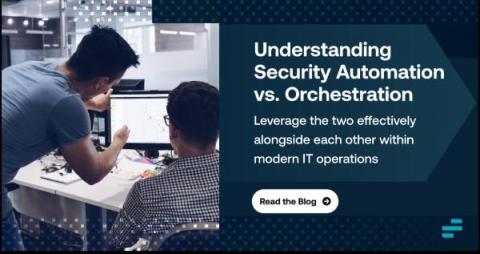
Understanding Security Automation vs. Orchestration

“Automation” and “orchestration” are terms that frequently appear within the same sentence – which is unsurprising, because they are closely related. In fact, they’re so similar in meaning that it can be easy to confuse their meanings or assume that there is basically no real difference between security automation and orchestration. But, as with many concepts in the world of IT and security (“observability” vs.

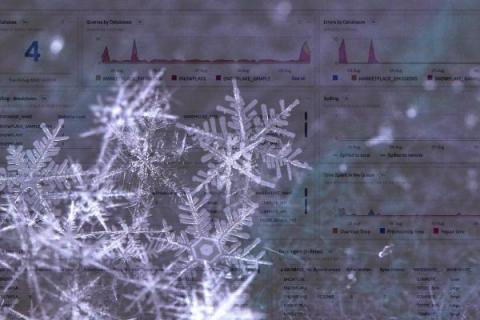
Snowflake DB: Observing a Snowflake From Cloud to Chart

You’ve probably heard something like this before: “It’s a managed service! We don’t need to worry about anything!” But when it comes to your production workloads, database monitoring is imperative. With the new Snowflake Dashboards and Detectors in the Splunk Observability Content Contributors repository you can start seeing the details of individual Snowflakes.

Deploying a Web App in any cloud using Terraform and Multy

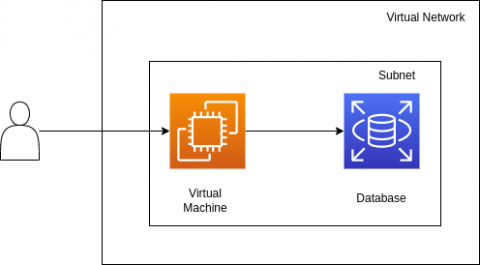
In this tutorial, we'll deploy a simple web app to the cloud of your choice - composed of a database and a virtual machine where the frontend code will run. So that the configuration is reusable and consistent, we'll write it in Terraform. Usually Terraform configurations are cloud-specific, and changing clouds requires a complete rewrite. In this case, so that you can reuse the same configuration across clouds, we'll be using Multy.

IT monitoring reduces the workload of retailers by about 30%

Food retailers reduce the workload accumulated by their IT areas by almost 30% thanks to monitoring. Controlling data and extensive information from the whole company, by controlling, supervising and ordering everything through the same system, allows to reduce the times of action in the face of possible errors and failures, improves resource management and organization and increases the effectiveness of the business activity. In addition, monitoring saves costs.

Monitoring outages in your third-party services with LogSnag

LogSnag is the new kid on the block, but we bet that it will become relevant in this space soon. Today we will show you how to monitor outages and get alerts for your third-party services within LogSnag. What is LogSnag? Here's the intro, but you can learn more at LogSnag official website.

Your CI GitFlow is Broken

One of the great things about GitFlow is that it makes parallel development very easy by isolating new development from finished work. New development, such as features, is done in feature branches and is only merged back into the main body of code when developers have validated the feature and the code is ready for release. For most development teams, feature validation happens in a staging branch coupled with a single testing environment.

Creating Homebrew Formulas with GoReleaser

We chose to use GoReleaser with our distro of the OpenTelemetry Collector in order to simplify how we build and support many operating systems and architectures. It allows us to build targeting a matrix of GOOS and GOARCH targets as well as automate creating a wide range of deliverables. Ones we have utilized are building tarballs, nfpm packages, docker images, and Homebrew formula.