Operations | Monitoring | ITSM | DevOps | Cloud

Grafana alerts as code: Get started with Terraform and Grafana Alerting

Alerting infrastructure is often complex, with many pieces of the pipeline that often live in different places. Scaling this across many teams and organizations is an especially challenging task. As organizations grow in size, the observability component tends to grow along with it. For example, you may have many components, each of which needs a different set of alerts. You may have several teams, each with a different channel where notifications should be delivered.

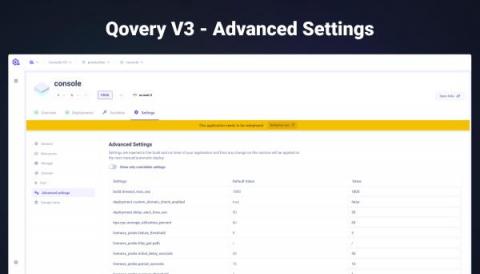
Qovery V3: Advanced Settings Building the Path to Beta Testing

Right at the beginning of the summer was the launch of our console V3 in Alpha testing; as explained in this article, the main goal of this V3 was to solve the UX issues present in the V2; it's also fully open source and rewritten from scratch in React. We gathered many feedbacks, and our Frontend team is continuing to add every feature already available on the V2 to go from Alpha to Beta testing at the end of September.

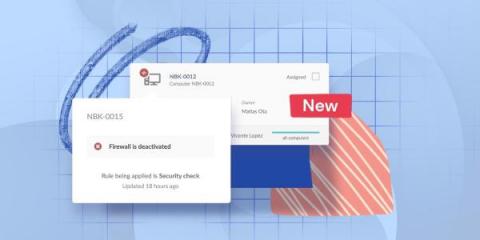
InvGate Insight Update: Easier Access to Health Rules

We have a new update for our InvGate Insight users. If you’re one of them, you surely know that you can already see the health state of your assets. However, we’ve just added a more direct way for you to access the health rules details, especially those in warning or critical state. Keep reading to find out the new path to view the health rules of your assets in InvGate Insight!

Harness Continuous Observability to Continuously Predict Deployment Risk

In my previous blog, I discussed how continuous observability can be used to deliver continuous reliability. We also discussed the problem of high change failure rates in most enterprises, and how teams fail to proactively address failure risk before changes go into production. This is because manual assessment of change risk is both labor intensive and time consuming, and often contributes to deployment and release delays.

Ubuntu Core set to redefine industrial computing with new edge AI platform NVIDIA IGX

Enterprises struggle to bring AI and automation to the edge due to strict requirements and regulations across verticals. Long-term support, zero-trust security, and built-in functional safety are only a few challenges faced by players who wish to accelerate their technology adoption.

Software Delivery Platforms to Benefit DevOps Practices

In this era where applications are taking over the world, delivering the service to your customer with scalability and security is of the utmost importance. The software delivery platform helps to manage the data flow, traffic management, and security of the data from both sides of the application. If you are studying software delivery platforms, then most of you must have heard about the Codefresh software delivery platform for continuous integration and continuous deployment of the application.

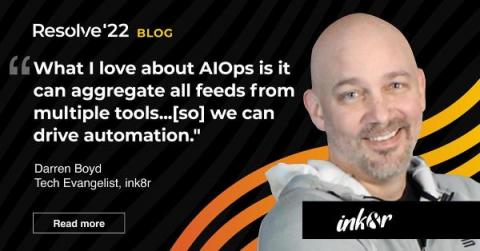
RESOLVE '22: Observability and AIOps sitting in a tree

In our first session from RESOLVE ‘22, we were honored to have Darren Boyd and Satbir Sran from the Incubator podcast and ink8r think tank talk observability and AIOps with BigPanda’s Aaron Johnson. Both panelists are part of communities adopting open standards, and they regularly consult with organizations about how they can improve IT Operations and overall performance.

How to be a top online retailer in 2023? Start with a top ecommerce search engine

Search is the key to improving the customer experience–and business outcomes Retailers that weathered the global pandemic now face new challenges: emerging shopping patterns, competitive upstarts, and economic uncertainty.

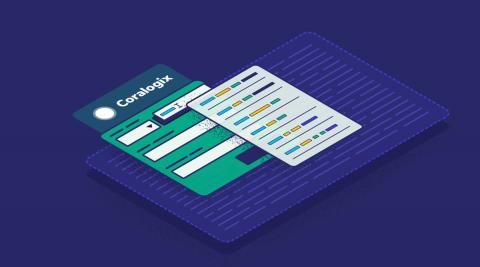
Contextual Autocomplete: Why Coralogix is Focused on Developer Productivity

In the observability toolchain, all of our efforts go into data storage and analysis, and the usability of our system becomes a second-class citizen. Autocomplete is a crucial usability feature that significantly improves the developer experience. It is ubiquitous amongst engineering tools from IDEs to CLIs. Autocomplete has long been a feature of many observability tools, but they all miss a crucial detail – optimizing for developer productivity.