One of my initial surprises upon joining Catchpoint about five months ago was to do with how much confusion there is in the observability market. Every single vendor has almost the same message around ensuring a great digital experience for your customers or employees or both. Of course, these experiences are critical to get right, but for the most part many of these solutions, at best, help to ensure that sites are live and available, and that they are reachable by some users.
As a busy executive, taking time to attend an event and listen to sessions is a luxury. And yet, I know that many of my best breakthrough ideas on how to lead my teams have come from taking those moments to tune into new ideas. The challenge is figuring out where the hidden nuggets of wisdom are buried in a mountain of content.
Netdata just launched a Pandas collector. Pandas is a de-facto standard in reading and processing most types of structured data in Python so if you have some csv/json/xml data, either locally or via some HTTP endpoint, containing metrics you’d like to monitor, chances are you can now easily do this by leveraging the Pandas collector without having to develop your own custom collector as you might have in the past.
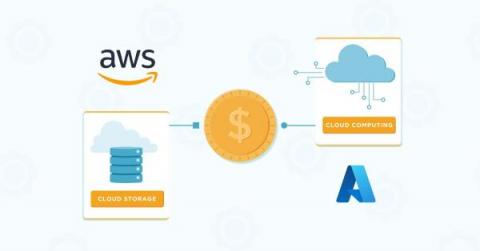
Kubernetes has broken down barriers as the cornerstone of cloud-native application infrastructure in recent years. In addition, cloud vendors offer flexibility, speedy operations, high availability, SLAs (service-level agreement) that guarantee your service availability, and a large catalog of embedded services. But as organizations mature in their Kubernetes journey, monitoring and optimizing costs is the next stage in their cloud-native transformation.
As a developer, I love the versatility of Python. Over the years I have used Python for so many different use cases: game development, APIs, IoT, machine learning, and web development. It can scale tall applications in a single bound and take on any challenge faster than you can pip install flask. Something you learn very quickly in the world of app development is to build everything for scale.
In the scenario where you want to execute tasks repeatedly at a specific time and have full control over when they are executed and how the results are handled, it makes sense to build this into your application instead of setting up a cron job, for example. I’d like to give you a quick example of how you can achieve this in PHP using two great libraries, ReactPHP and cron-expression. ReactPHP is an event-driven programming library that has an event loop at its core.