Operations | Monitoring | ITSM | DevOps | Cloud

Eight MSP growth tips

With the complex and chaotic nature of IT services, MSPs often stay ‘afloat’ by concentrating on day-to-day operations. In doing so, it’s easy to lose sight of the bigger growth opportunities. Scaling is a challenge many MSPs face. Some struggle to develop a clear strategy, while others don’t know the focus areas to help them succeed. If you’re not built to scale, you could miss out on opportunities to win market share.


A step-by-step guide to successfully migrating to the cloud

If you have decided to move your infrastructure and workloads to the cloud, you know that there is no one-click shortcut for carrying out the migration process. There are multiple factors and particularities of your infrastructure to consider when planning and subsequently taking the necessary steps for cloud adoption.

Redis Monitoring: What Metrics Should You Measure to Ensure Performance

Redis is an open-sourced, BSD 3 licensed, highly efficient in-memory data store. It is used widely in the industry because of its incredible performance and ease of use. It can easily be used as a distributed, in-memory key-value store, cache, or message broker. It can hold virtually any data structure, making it highly versatile. Redis was architectured and developed with speed in mind and designed to keep all the data in memory.

Top 3 Issue Alert Tips to Stop Noisy Notifications

Sentry Alerts ping you on Slack, Microsoft Teams, or Pager Duty when something goes needs your attention. However, too many alerts can turn your notification channel into an endless noise feed. I spoke with dozens of Sentry customers in the past 6 months, and something I heard over and over again was “Sentry can get noisy at times” and “There are days I can’t keep up with Sentry notifications because we get so many of them”. Does this sound familiar?

How automation drives DevOps

DevOps is the combination of software development and IT operations. It is a set of tools and methodologies designed to speed up the development of a product and facilitate efficiency throughout its lifecycle. DevOps can increase the rate at which applications and updates are delivered by managing and automating the monotonous and repetitive tasks that plague the development and deployment process.

How to Reduce Costs With DevOps

As defined by Amazon Web Services, DevOps is the integration of cultural concepts, practices, methods, and tools which allow an organization to provide services and applications at high speed: advancing and improving their products at a much faster rate than those using traditional software process for infrastructure management and development. This allows organizations to serve clients more effectively and compete in the market.

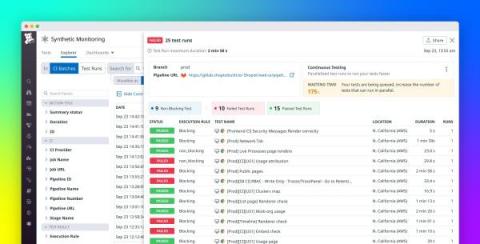
Use Datadog Continuous Testing to release with confidence

Testing early and often in the development cycle is a must for ensuring that your application meets user expectations. Poor performance and errors can alienate users and prevent you from meeting crucial benchmarks and OKRs. Additionally, having to constantly implement fixes after new, under-tested features are added can fatigue developers and strain your resources, making your organization less nimble overall.

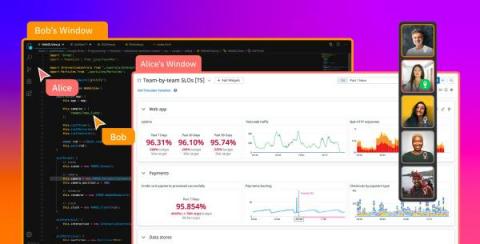
Leverage collaborative screen sharing with Datadog CoScreen

Remote collaboration tools have transformed how remote and hybrid teams work synchronously. But while the current popular chat forum and video conferencing solutions are inarguably helpful, few were created with software development and operations in mind. CoScreen is the only real-time collaboration tool designed specifically for remote and hybrid engineering teams that integrate both interactive screen sharing and video conferencing features.