The global "mHealth market" is anticipated to reach USD 293.29 billion by 2026, growing at a CAGR of 29.1% over the forecast period, according to Fortune Business Insights. This growth is being driven by the rising adoption of mobile health technologies and the increasing use of cloud-based services. This growing customer dependence and ever-changing landscape of healthcare make it more important than ever to have a comprehensive understanding of how your applications are performing and to ensure that mission-critical applications, which can cause serious consequences from downtime, perform as they should.
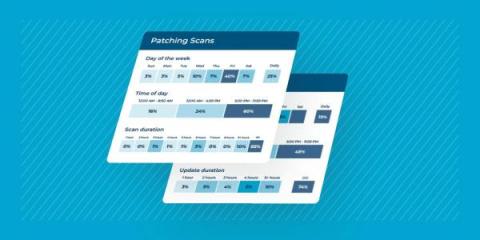
There’s no doubt that patching is tedious work. However, CNP technologies’ article on the importance of patching points out that “74% of companies say they simply can’t patch fast enough because the average time to patch is 102 days.” Understanding the patch management lifecycle is the first step that organizations take towards optimizing patching processes and creating a more secure IT environment.
With 34% of cloud developers facing difficulties when calculating how much their cloud provider is going to charge them each month, it is essential to prioritize cloud cost management. This concept surrounds the process of monitoring, controlling, and optimizing an organization’s cloud service spend. By having the correct cloud cost management strategies in place, organizations are able to eliminate unnecessary expenses through optimizing resource allocation and cost-saving strategies.
I’m excited to announce the general availability of the SUSE NeuVector container security platform version 5.1. With the 5.1 release, customers will benefit from more efficient and powerful vulnerability scanning and admission controls across multiple clusters through centralized enterprise scanning, auto-scaling scanners and support for the new Kubernetes (1.25+) pod security admission (PSA) standard. The release also supports the Cilium network plug-in.
As companies start their Kubernetes and cloud-native journey, cloud infrastructures and services grow at a rapid pace. This happens all too often as organizations shift left without thorough controls, which can lead to overallocating and overspending on their Kubernetes environments. Organizations running workloads in the cloud can put budgets at risk when they lack information about key facts.
Cribl places high importance on its core values of Customer First, Always; Together; Curious; Irreverent but Serious, and Transparent. We strive to embody these values every day, and a particular customer issue recently enabled us to exemplify them to that customer. Recently, the Cribl Support, Software Engineering, and Product Management teams worked together with our largest Cribl Cloud customer to resolve throughput issues that arose when integrating Cribl.Cloud with Azure Event Hubs (EH).
As we enter the holiday season, online shopping and payment systems are gearing up for higher traffic and workloads. Ensuring that these applications can handle the increased demand without slowing down or crashing is critical for providing a smooth and efficient experience for customers. One way to improve the performance and reliability of these applications is by using chiselled Ubuntu images in your containerised deployment.