Operations | Monitoring | ITSM | DevOps | Cloud

Top 3 ways to successfully create and defend your IT budget

Budgets are a touchy subject for anyone, and there’s no one-size-fits-all approach. However, the work ITOps does is integral to the success of your organization, so being confident in building and defending your budget is crucial to getting the resources you need. So what does success look like when it comes to ITOps budgets? In our recent podcast episode from our series, That’s great IT, I sat down with global IT leader Nigel Peacock to discuss the best ways to justify your ITOps budget.

How to Use Big Data to Your Advantage

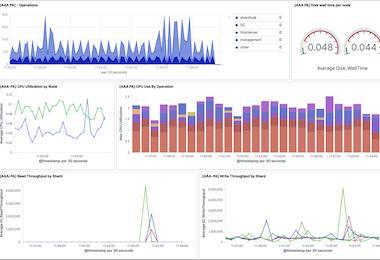
Users have been generating increasing amounts of data in the past few years, partly due to rapid digitalization since the pandemic. As a result, increasing numbers of analytics applications are capitalizing on these data assets. However, building scalable systems is no trivial task and incidents are inevitable. Complex systems generate data in the form of logs, traces, metrics, and more, which organizations often find themselves sprinting through. Such logs are a powerhouse of valuable information.

The Cloud Monitoring Journey

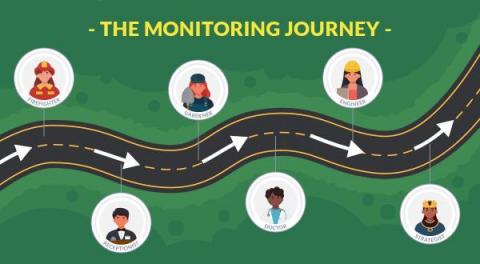
Monitoring is not a goal, but a path. Depending on the maturity of your project, it can be labeled in one of these six steps of the cloud monitoring journey. You will find best practices for all of them and examine what companies get from each one. From classic virtual machines to large Kubernetes clusters or even serverless architectures, companies have adopted the cloud as a mainstream way to provide their online services.

Querying InfluxDB IOx Using the New Flight SQL Plugin for Grafana

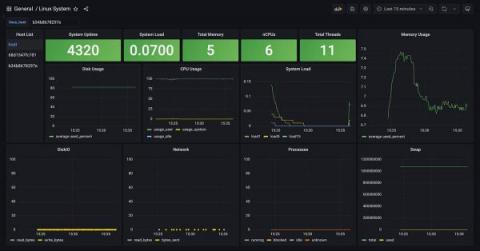
Grafana has been a staple visualization tool used alongside InfluxDB since its inception. With the release of InfluxDB Cloud powered by IOx, there is now a new way to integrate InfluxDB and Grafana: Flight SQL. Two of our engineers, Brett and Helen, have been working hard to create a new Grafana plugin called Flight SQL. This open-source plugin allows users to perform SQL queries directly against InfluxDB IOx and other storage engines compatible with Apache DataFusion.

Tackling the Security Budget in Times of Economic Uncertainty: IT and Security Leaders Prioritize Cybersecurity

In today’s economic climate, IT and security budget owners are always looking for ways to increase efficiency while controlling costs. With tighter budgets and increasing workloads, organizations have to find ways of stretching their limited resources while making sure investments are paying off.

How Australia can elevate government customer experience

The pandemic shifted us all online, whether we wanted to or not. It forced the public sector to adapt more than most industries, requiring citizens to interact digitally with governments to receive the health and financial support available to them. Digital technology promises to elevate government customer experience (CX) by scaling services, cutting wait times, and reducing costs.

Sneak peek: Groups in Mission Portal

Using CFEngine there are many ways to group and classify your hosts. In order to group their hosts, our users use a combination of JSON files, CFEngine policy language (with variables, classes, and class expressions), host specific data and host filters in Mission Portal. With these features you can choose which hosts to show in reports, and you can make decisions on what changes to make on which hosts.

Observability vs Monitoring - The difference explained with an example

Observability vs monitoring has been a common topic in DevOps recently. There has been a lot of debate, and I have learned a lot from them when I started my observability journey. Most literature on observability is associated with a particular product or shares a textbook definition. In this blog post, I want to give you a practical understanding of observability and the differences between observability and monitoring with different scenarios and examples. We will cover the following topics here.

The Best OpenSearch Dashboard Examples

OpenSearch dashboards are a powerful tool for visualising and exploring data stored in an OpenSearch-compatible data store such as Elasticsearch. With OpenSearch's intuitive interface and advanced analytical tools, this visualisation tool makes it easy to gain insights into your data and monitor and alert upon key metrics. Throughout this article, we'll look at some of the most impressive OpenSearch dashboard examples that showcase it’s capabilities and versatility.