Operations | Monitoring | ITSM | DevOps | Cloud

Unlocking the Potential of Machine Learning on the Cloud

Nowadays, when most people think about the term “machine learning,” they think of advanced, refined applications such as Chat-GPT, the chatbot-based deep learning text generator, or AlphaGo, the computer program that’s currently the “world's best player” of the board game Go.
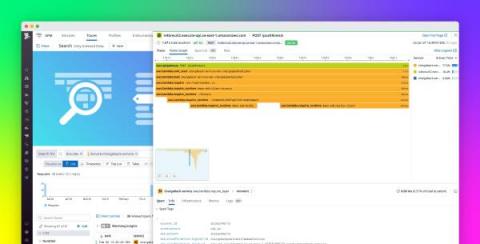

Understand serverless function performance with Cold Start Tracing

Serverless developers are undoubtedly familiar with the challenge of cold starts, which describe spikes in latency caused by new function containers being initialized in response to increasing traffic. Though cold starts are usually rare in production deployments, it’s still important to understand their causes and how to mitigate their impact on your workload.

The hidden key to finding skilled tech workers

It’s no secret that we’re experiencing a talent shortage in the tech industry. At the same time, the automation of many jobs is near. It’s easy to assume these two realities mitigate each other, but the situation is much more complex. Although automation may replace millions of low-skill jobs, it will create millions of jobs that require skilled tech workers, according to a report by consulting company BCG.

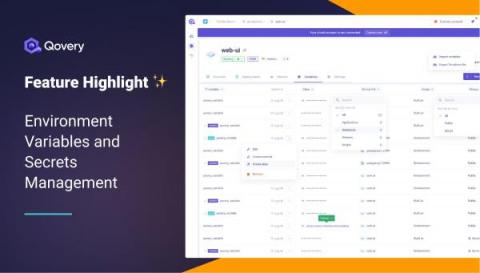
Deep Dive into Qovery's Environment Variables and Secrets Management

Deploying an application is an intricate process that requires managing environment variables and secrets. These variables and secrets help applications access essential resources such as API keys, database credentials, and more. However, manually managing these variables and secrets can be challenging and time-consuming, especially for engineering teams that manage multiple applications. Fortunately, Qovery has a solution for this.

Process monitoring: How you can detect malicious behavior in your containers

The default pod provisioning mechanism in Kubernetes has a substantial attack surface, making it susceptible to malevolent exploits and container breakouts. To achieve effective runtime security, your containerized workloads in Kubernetes require multi-layer process monitoring within the container.

Common misconceptions behind cloud migration failures

Migrating your workloads to the cloud can bring some undeniable benefits to your organisation. For example, you can leverage cloud automation to significantly improve your time to market. You can also benefit from the ever increasing number of cloud regions to place your workloads close to your clients. This improves the response time of your services and, as a result, your customers’ satisfaction.

Best Practices for MongoDB Monitoring with Prometheus

The MongoDB document-oriented database is one of the most popular database tools available today. Developed as an open-source project, MongoDB is highly scalable and can be set up in your environment in just a few simple steps. When running and managing databases, monitoring is a key requirement.

IT Automation: A Key Strategy for Maintaining Customer and Employee Satisfaction

The current state of the economy has left many companies in a state of uncertainty, with 58% of business leaders feeling the pressure of too many initiatives to be supported without the right resources. While these companies look for ways to stay competitive and, in many instances, to accomplish more with less, compromising on delivering high-quality experiences is not an option, particularly in a world where fast, seamless digital experiences have become the norm.

What is the difference between unsupervised and supervised learning in machine learning?

Machine learning affects nearly every aspect of our daily lives. To understand how this technology works and how you can use machine learning, it’s necessary to know the difference between unsupervised and supervised machine learning. The following are essential points regarding the different aspects of unsupervised and supervised machine learning.