Operations | Monitoring | ITSM | DevOps | Cloud

Network Technician Guide: Key Roles, Tools, and Career Growth

In the ever-evolving landscape of the digital era, the backbone of our interconnected world is woven together by an intricate web of networks. Behind the scenes, ensuring the seamless operation of these networks are the unsung heroes known as network technicians. These skilled professionals wield their network toolkits to maintain, troubleshoot, and optimize the complex systems that keep our data flowing and communications thriving.

Discovering the 24 Best Comprehensive Network Visibility Tools

In today's world, networks are crucial for businesses to communicate and share data smoothly. But keeping networks running well and staying ahead of performance issues can be tricky. That's where network visibility tools come in handy. These tools give a complete view of a network, helping IT pros see everything that's happening and fix any issues quickly.

Why you should monitor microservice mediator APIs

Microservice mediator APIs provide a flexible, scalable, and decentralized approach to microservices communication, enabling organizations to build robust, modular, and maintainable applications. They shield microservices from the details of the other implementations and promote loose coupling, helping to ensure autonomy, scalability, and independence among microservices.

Using eBPF to Debug eBPF

In one of our latest posts, StackState Co-Founder Mark Bakker described how eBPF revolutionizes observability and how StackState’s agents rely heavily on eBPF to capture and analyze the data moving through your cluster. Today, we’re looking at an example where our eBPF code failed and — by diving deep into the intricacies of eBPF implementation in the Linux kernel — share the tale of how we fixed it using even more eBPF.

Splunk second thoughts? It's time for the cloud-native alternative

Back in September when Cisco announced they were acquiring Splunk, we explained how the market was consolidating with Sumo Logic ahead of the pack, challenging traditional vendors with our cloud-native platform. Now that the deal is complete and Splunk is officially a Cisco company, we’re hearing from more Splunk customers who are considering their options.

What is alert fatigue and its effect on IT monitoring?

Talking about too many cybersecurity alerts is not talking about the story of Peter and the Wolf and how people end up ignoring false warnings, but about its great impact on security strategies and, above all, on the stress it causes to IT teams, which we know are increasingly reduced and must fulfill multiple tasks in their day to day.

CI/CD observability: Extracting DORA metrics from a CD pipeline

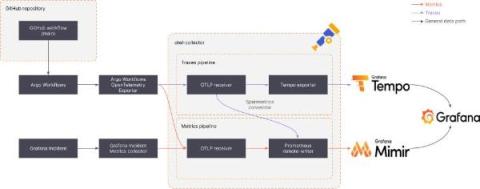
Last November, Dimitris and Giordano Ricci wrote a blog post about CI/CD observability that looked into ways to extract traces and metrics in order to get a better understanding of possible issues inside a CI/CD system. That post focused on getting data from a continuous integration (CI) system, and it really resonated with the community.

Fine-tune observability configurations for all your Azure integrations in one place

Microsoft Azure provides an array of managed services to support many aspects of cloud computing, including application development, workload migration, and data management. To help you monitor the health and performance of these services, Datadog offers integrations with more than 40 Azure services, including Azure Kubernetes Service (AKS), Cosmos DB, and Azure App Services. Each integration provides robust data visualizations, meaningful alerts, and one-click Datadog Agent deployment.

Improving INP and FID with production profiling

On March 12 Google began promoting INP (Interaction to Next Paint) into a Core Web Vital metric in an effort to push performance beyond page loads. This means your website or application’s SEO ranking may be impacted if users do not have smooth interactions on the site or app. While this change is a net positive for users, finding the root cause of these reported slow interactions can be tricky for developers.

Steps to Taming Hybrid Cloud Complexity: Eliminating Visibility Gaps & Enabling Actionable AI-Powered Insights

For years “the move to the cloud” implied a singular event – a singular migration to a singular entity. It all sounded so simple. Yet, the “simple” act of moving to the cloud stands in stark contrast to the reality of today’s complex, hybrid IT estates where the overwhelming volume of data flows can make it challenging for IT teams to effectively pinpoint and rectify service incidents.