Operations | Monitoring | ITSM | DevOps | Cloud

Edwin AI Turns One: What a Year of Agentic AIOps Looks Like

Twelve months ago, we shipped Edwin AI with a specific hypothesis that AI agents could handle the operational drudgery slowing down ITOps teams. It was a deliberate bet against the cautious consensus that AI should act only as a copilot, limited to offering suggestions. Most AIOps tools still follow that script. They’re stuck surfacing insights and stop short of action. Edwin was built differently. It was designed to make decisions, correlate events, and execute fixes.
Monitor Your Kubernetes Cluster: Get Started in Four Minutes

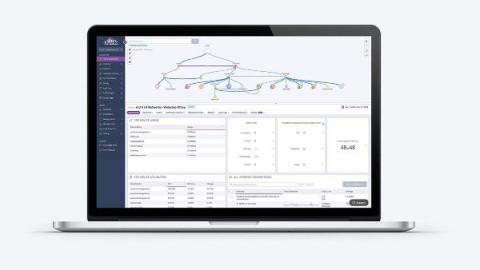
For enterprises embracing Kubernetes, managing these intricate environments can pose significant challenges. Thankfully, monitoring of Kubernetes clusters is readily achievable using the Universal Monitoring Agent (UMA) in conjunction with DX Operational Observability (DX O2).

The role of network automation in AI-driven businesses

AI adoption is accelerating across nearly every industry. According to McKinsey’s 2025 State of AI report, 78% of organizations now use AI in at least one business function, up from just 55% the year prior. From real-time analytics to generative tools and process automation, AI is becoming a fundamental part of how modern businesses operate and compete.

Tales From the Trench: Building With LLMs and Honeycomb

AI discourse these days is all over the place. Depending on who you talk to, AI’s are absolute flash-in-the-pan junk, or they’re the best thing since sliced bread. I want to cut through the noise, though, and see for myself what someone can do out here on the bleeding edge. Thus, I’m setting myself a challenge: write a usable—and useful—application with Claude Code, from soup to nuts. Here are the rules: With our ground rules established, let’s figure out our app!

Adaptive alerting: faster, better insights with the new metrics forecasting UI in Grafana Cloud

In Grafana Cloud, we offer a range of AI capabilities to support your observability needs, including a feature for forecasting on any of your metrics and coupling it with Grafana Alerting. This is critical functionality if you want to make the switch from reactive to proactive alerting, as troubleshooting a problem before it arises is an important part of modern observability.

Kubernetes CPU Limit: How to Set and Optimize Usage

Kubernetes makes it easy to scale applications. But when it comes to CPU resource management, a poorly tuned cluster can quickly become unstable or inefficient. For network engineers, setting CPU requests and limits correctly—and understanding the deeper implications—is essential for keeping workloads efficient, costs predictable, and noisy neighbors in check.

Introducing Sentry's Flutter SDK 9.0 - Logs, Session Replay, Feature Flags, and more

If you've ever had to debug a Flutter app after an error report that just says “Null check operator used on a null value,” you already know: context is everything. And context can be hard to come by when you’re juggling native code, Dart, async stack traces, and platform channels. With v9 of our Flutter SDK, we’re introducing some features to help you get even more visibility into what’s going wrong, with the insights to make it better. Here’s what’s new.

Defining SLA/SLO-Driven Monitoring Requirements in 2025

SLA/SLO-driven monitoring aligns your observability strategy with business objectives by defining measurable service targets and implementing monitoring systems that track progress toward those goals. Service Level Agreements (SLAs) represent commitments to users, while Service Level Objectives (SLOs) are internal targets that ensure you meet those commitments with a safety buffer. In 2025, organizations running distributed systems need monitoring that goes beyond basic uptime checks.