Operations | Monitoring | ITSM | DevOps | Cloud

Docker Stop vs Kill: When to Use Each Command

When a container starts consuming excessive memory or becomes unresponsive, you need a way to shut it down. The two primary options — docker stop and docker kill,both terminate containers, but they operate differently and have different implications. The key difference: docker stop sends SIGTERM for a graceful shutdown, then escalates to SIGKILL if the process doesn’t exit in time. docker kill skips straight to SIGKILL, terminating the container immediately.
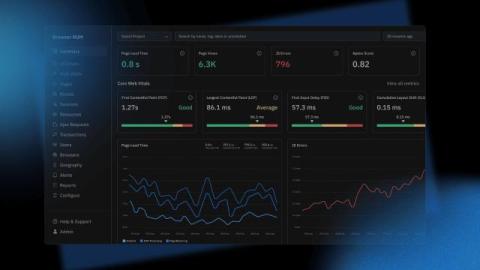
What is Real User Monitoring (RUM)?

As applications grow more complex and user expectations rise, delivering seamless and high-performing experiences to users is non-negotiable. Real User Monitoring (RUM) has emerged as an essential technique that provides developers, DevOps teams, and site reliability engineers with deep visibility into the actual performance of web applications that capture the experiences of real people in real-time.

7 Critical Insider Threat Indicators and How to Detect Them

Cybersecurity threats don’t come solely from external attackers. Insider threats also require your attention. Insider risk originates from employees, contractors or business partners who possess legitimate access to IT systems for their work tasks. They can access valuable data and systems that, if exposed or have some data stolen, could harm an organization’s reputation.

Get more out of Sumo Logic: five log search hacks you'll actually use

Think Sumo Logic is only for query language pros? Think again. Whether you’re deep into JSON logs or just trying to make sense of a Linux error message, these five time-saving hacks turn anyone into a log-searching ninja, no regex, no complexity, just clicks. From instantly parsing values to filtering down with a tap, these tips will help you troubleshoot faster, work smarter, and feel more confident in your observability game. You’ve got logs, now it’s time to put them to work.

An open source tool to speed up iOS app launch

What do the Snapchat, Airbnb, and Spotify iOS apps have in common? They all use order files to speed up their iOS app launch times. Order files re-order your binary to improve how symbols are loaded into memory. No code changes are necessary, but generating an optimized order file can be cumbersome, so it’s mostly done by larger teams or teams willing to pay for a service like Emerge Tools’ Launch Booster. It just so happens that Emerge Tools is now part of Sentry.

Log Management and Query Optimization in Kibana

When troubleshooting with the Elastic Stack, Kibana is often the interface you’ll rely on to query and visualize logs. It doesn’t change the data—it just makes it searchable and a bit easier to work with under pressure. If you’re investigating an outage, tracking performance issues, or trying to correlate events across services, Kibana’s log exploration tools can speed up the process, assuming they’re configured and used well.

Mastering Global Telemetry: How Cribl Puts You in Control

Let’s face it: managing global data infrastructure isn’t just hard, it’s “I-just-deployed-the-wrong-config-to-prod-again” hard. If you’re a Cribl Admin or Operator working across clouds, continents, and compliance regimes, your to-do list probably reads like a series of increasingly desperate Post-it notes. Sources. Destinations. Pipelines. TLS settings. Proxies. Dev, staging, prod. Repeat. Forever. But what if we told you there’s a better way?

A New Look At Dependencies: Icinga Dependency Views

We’re excited to share that Icinga now offers an improved way to view dependencies. With the releases of Icinga DB Web 1.2.0, Icinga DB 1.4.0, and Icinga 2.15.0 today, any dependencies you’ve set up in Icinga will now be visually represented. Additionally, we’re introducing a new enterprise feature called Icinga Dependency Views, available through an Icinga subscription. This component expands Icinga DB Web with even more powerful capabilities.

Honeycomb Observability Day London: A Jam-Packed Day of Great Talks

On May 15th, 2025, Honeycomb hosted Observability Day (or O11yDay) in the London financial district. The skies were clear and the weather was wonderful and we had a huge turnout, from our networking breakfast to the happy hour at the end of the day.

Securing AI with AI-SPM: The Next Step in AI Risk Management

The conversations around artificial intelligence (AI) typically revolve around its vast potential: writing applications, automating tasks, or transforming entire industries. However, despite the excitement around AI’s potential, the more pressing issue for many organizations is how to manage the risks of deploying it at scale across the enterprise. This is where AI Security Posture Management (AI-SPM) comes into play.