

Operations | Monitoring | ITSM | DevOps | Cloud

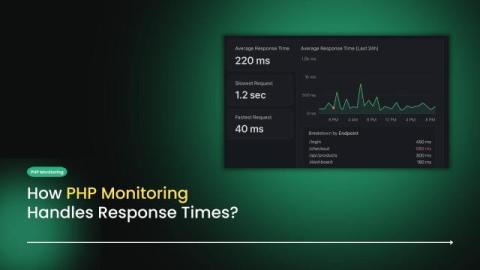
How PHP Monitoring Handles Response Times?

Every millisecond matters when users interact with your PHP application. If a page lags or a request takes too long, most people will leave without a second thought. For DevOps teams, these slowdowns are frustrating because the root cause is rarely obvious. Developers are left combing through logs and traces, often realizing too late that poor response times are already hurting user trust and business outcomes. The pain point: slow PHP response times frustrate users and create hidden costs for teams.

Beyond Wearables: How Remote Patient Monitoring Shapes Care Delivery

The healthcare industry has entered an era where the boundaries between in-person visits and digital health interactions are becoming increasingly blurred. Remote Patient Monitoring (RPM) sits at the forefront of this transformation, enabling physicians to track, analyze, and respond to patient health data in real time. While wearables such as smartwatches laid the groundwork, RPM has moved beyond step counts and heart-rate alerts. It now serves as a critical pillar of value-based care, reshaping how medical professionals manage chronic conditions, enhance patient engagement, and improve clinical outcomes.

Empowering an MCP server with a telemetry pipeline

This blog was authored by Jason Bloomberg, Managing Director, Intellyx BV ‍ Observability depends upon telemetry – the data streaming from various applications, services, and systems that indicate their internal state in real-time. Various tools consume such telemetry to enable both operational and cybersecurity tasks.

How to Improve MariaDB Performance: Track Slow Queries with Logs and Metrics

Database latency rarely starts in your app layer because it’s almost always a query doing more work than it should. Metrics tell you when that happens, but slow-query logging tells you which statement did it and how. That’s gold for tracking down missing indexes, inefficient filters, or accidental full scans. Pair the logging with a some lightweight counter metrics, and you get both an early warning and a clear path to a fix.

Synthetic Monitoring for Vibe Coded Apps: Why You Need It

Not all software is the product of rigid planning, extensive documentation, and carefully designed test pipelines. Some of it emerges in bursts of intuition, created by small teams or individuals who prioritize momentum over process. This is what many engineers call vibe coding: development driven by flow and creativity, where the goal is to get something working quickly rather than ensuring every edge case is accounted for.

Landing Page Monitoring: Why, When and How to Do It Right

Landing pages are the lifeblood of modern marketing campaigns. They’re not the homepage, not the product catalog, not the blog—they’re the sharp end of the funnel where traffic from ads, emails, and social clicks is supposed to turn into revenue. A landing page is where a $50,000 media buy either pays off or evaporates.

Tiger teams: How we tackle urgent, cross-functional challenges at Grafana Labs

A year ago, we hit a wall. Our Grafana OSS releases were excruciating to execute. The process was confusing and hard to follow, security patches were non-trivial, and many engineering hours were lost to an overly manual process. We needed to move fast, cut through ambiguity, and pull in just the right people without waiting on roadmaps or org charts.

Understanding dbt: basics and best practices

Data Build Tool (dbt) is an open source analytics engineering framework that enables teams to transform raw data that has been loaded into a warehouse like Snowflake, BigQuery, Redshift, or Databricks using SQL-based workflows. dbt is available in two main forms: dbt Core, the free and open source CLI tool, and dbt Cloud, a managed platform that adds scheduling, UI support, collaboration tools, and native integrations.

Kubernetes Monitoring Metrics That Improve Cluster Reliability

A Kubernetes cluster can generate more than 1,400 metrics out of the box. That’s a lot of numbers to sift through, especially when you’re troubleshooting a production slowdown in the middle of the night. The key is knowing which metrics tell you the most, with the least noise. These are the signals worth paying attention to when you need answers fast.