Operations | Monitoring | ITSM | DevOps | Cloud

Cutting through Kubernetes Complexity with Lumigo

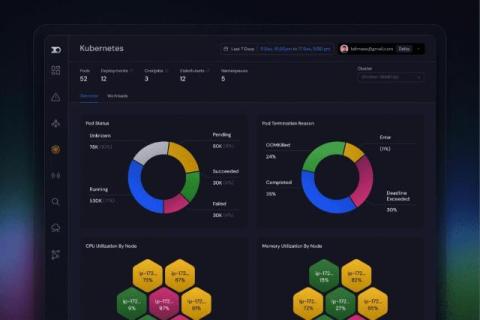
Effectively monitoring Kubernetes environments remains one of the most challenging aspects of modern application management. As applications grow more complex and distributed, the need for comprehensive visibility becomes paramount. We have continued to deliver major advancements in our Kubernetes monitoring, providing you with deeper insights and more powerful tools to tackle these challenges head-on.

Vendor consolidation-the key to IT cost optimization in 2026

IT departments are no strangers to complexity. With businesses navigating a range of cloud services, cybersecurity tools, and automation technologies, the modern IT ecosystem can resemble a medley of vendors, software, and services sown together. While these solutions aim to improve performance, the sheer volume of suppliers can muddy the waters when it comes to efficiency and cost management.

August Early Warning Signals: detected before providers

In August, StatusGator’s Early Warning Signals detected hundreds of global service outages before official provider acknowledgments were published. Our alerts notified users early on—often minutes before providers confirmed issues—giving IT teams the critical lead time to respond. Below, we highlight three of the most significant outages we tracked in August, followed by a curated selection of other notable disruptions.

Serverless Monitoring: Essential Metrics Every Developer Should Track

Serverless applications have become one of the most efficient ways to build and deploy software. With platforms like AWS Lambda, Azure Functions, and Google Cloud Functions, teams can focus on writing code while the provider handles infrastructure, scaling, and availability. But going serverless doesn’t mean monitoring stops being important. In fact, monitoring becomes even more critical because you don’t have direct control over the servers, containers, or VMs.

The Debugging Bottleneck: A Manual Log-Sifting Expedition

Imagine a developer at a fast-growing company. A customer support agent reports a critical issue: a user's recent order is stuck in a "pending" state. The agent provides a customer ID and a request ID. The developer's typical process is a familiar, painful dance: This process is slow, tedious, and prone to human error. The Mean Time to Resolution (MTTR) is measured in hours, not minutes, and it's a huge drain on engineering resources.

Database monitoring for beginners

Understand what's happening inside your database before your users do. Modern applications live and breathe through their databases. But when slow queries, connection spikes, or failed transactions start to pile up, the impact isn't just technical—it's customer-facing. That's why tracking your databases gives you the visibility into how your databases are performing under the hood.

Azure Data Factory Monitoring Integration

Microsoft Azure Data Factory is a cloud-based data integration service provided by Microsoft Azure. It enables you to create, manage, and automate data workflows that move and transform data from different sources to various destinations. Essentially, ADF allows you to design, orchestrate, and manage data pipelines, making it easier to work with large volumes of data across on-premises and cloud environments.